The Route to Human Rights in the Primitive Way
Camino Primitivo de Santiago · Asturias & Galicia, Spain
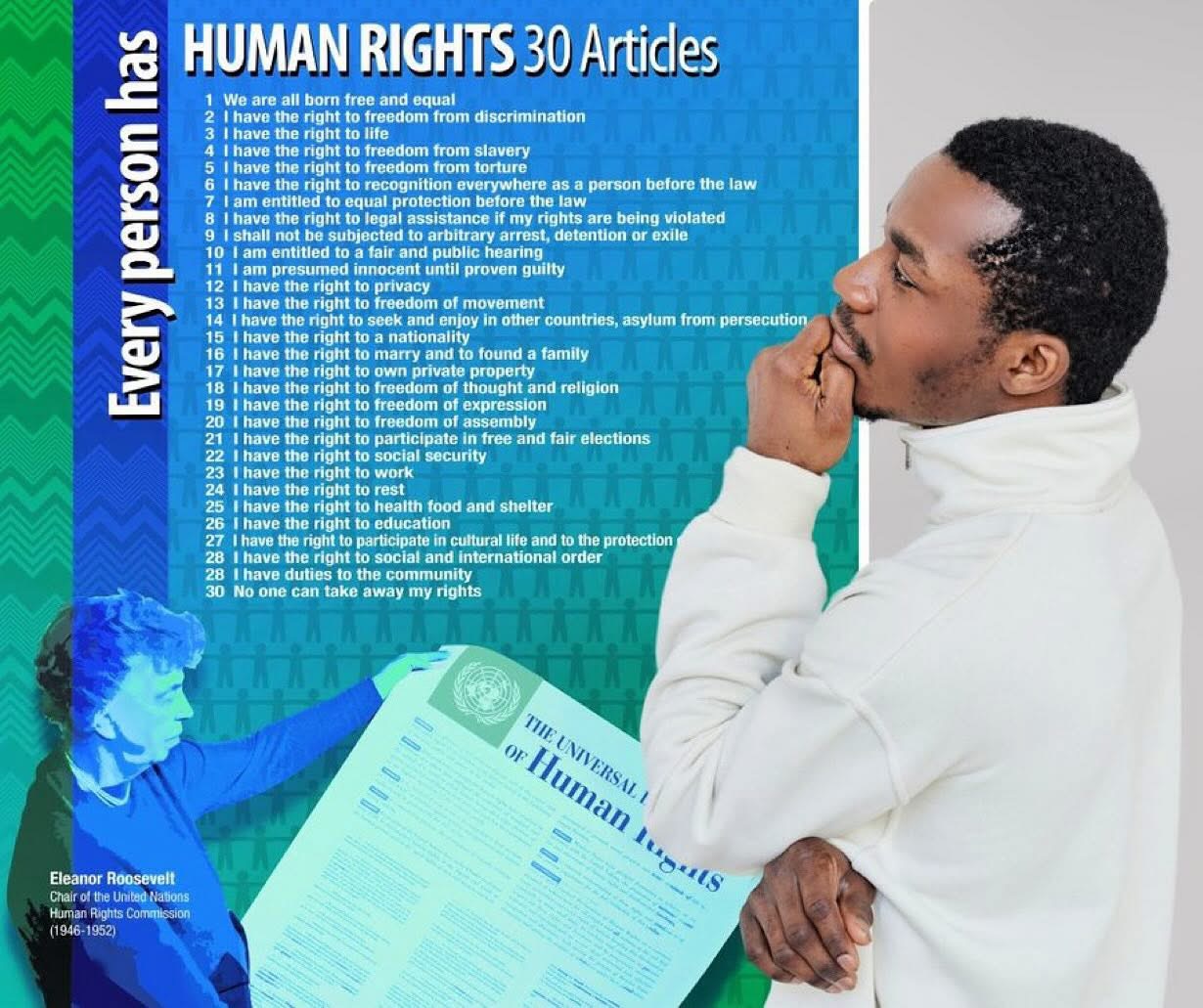
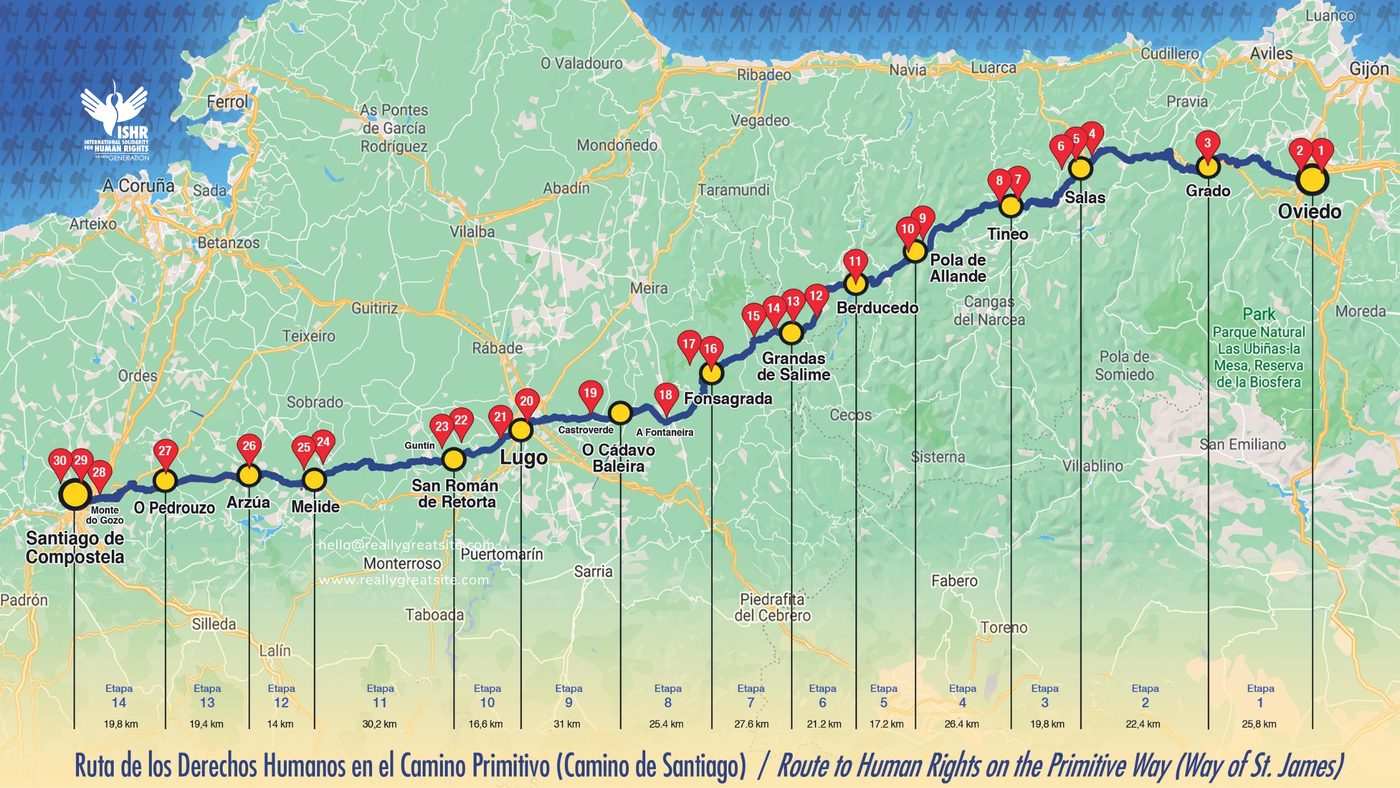
Created by International Solidarity for Human Rights (ISHR) in collaboration with Where is Asturias, the Route to Human Rights in the Primitive Way has a twofold mission: to raise awareness of the Universal Declaration of Human Rights (UDHR) and its 30 articles along the 14 stages, 320 kilometers and 2 Spanish regions of the Primitive Way, and to promote education about the UDHR among students in schools along the route.
To achieve this, the project installed 30 bronze plaques, works of art by Eladio de Mora, each representing one of the 30 human rights proclaimed in the UDHR, creating a visual and meaningful experience for the pilgrims and travelers who walk the Camino de Santiago. The project also engages local schools and students in learning about and spreading human rights, using the Camino as a living classroom and a platform for experiential learning. Through this educational initiative, it seeks to foster a culture of human rights and dignity among future generations, nurturing empathy, respect and a sense of responsibility for justice and equality.
The Organization
International Solidarity for Human Rights, Inc. (ISHRIGHTS) is a U.S.-based 501(c)(3) nonprofit organization that promotes human rights education and outreach in a positive way, through the arts. ishrights.org
What Is the Route to Human Rights?
A pioneering program in Europe
The “Route to Human Rights in the Primitive Way” (Camino Primitivo de Santiago) is a pioneering program in Europe. Since 2016 it has promoted the values of the Universal Declaration of Human Rights along the Primitive Way, which was declared a World Heritage Site in 2015. International Solidarity for Human Rights advanced this initiative with the collaboration and support of Where is Asturias, with the aim of promoting fundamental human rights such as equality, freedom, respect, education, food and justice among pilgrims, travelers and citizens.
The route required the placement and unveiling of 30 bronze plaques, designed by the Spanish pop artist Eladio de Mora (dEmo), along the 320 kilometers (199 miles) of the Primitive Way, in the Principality of Asturias and the Autonomous Community of Galicia, the two regions the Primitive Way crosses.
Collaborating councils: the City Council of Oviedo; the Asturian municipalities of Grado, Salas, Tineo, Allande and Grandas de Salime; and the Galician municipalities of A Fonsagrada, Baleira, Castroverde, Lugo, Guntín, Melide, Arzúa, O Pino and Santiago de Compostela.
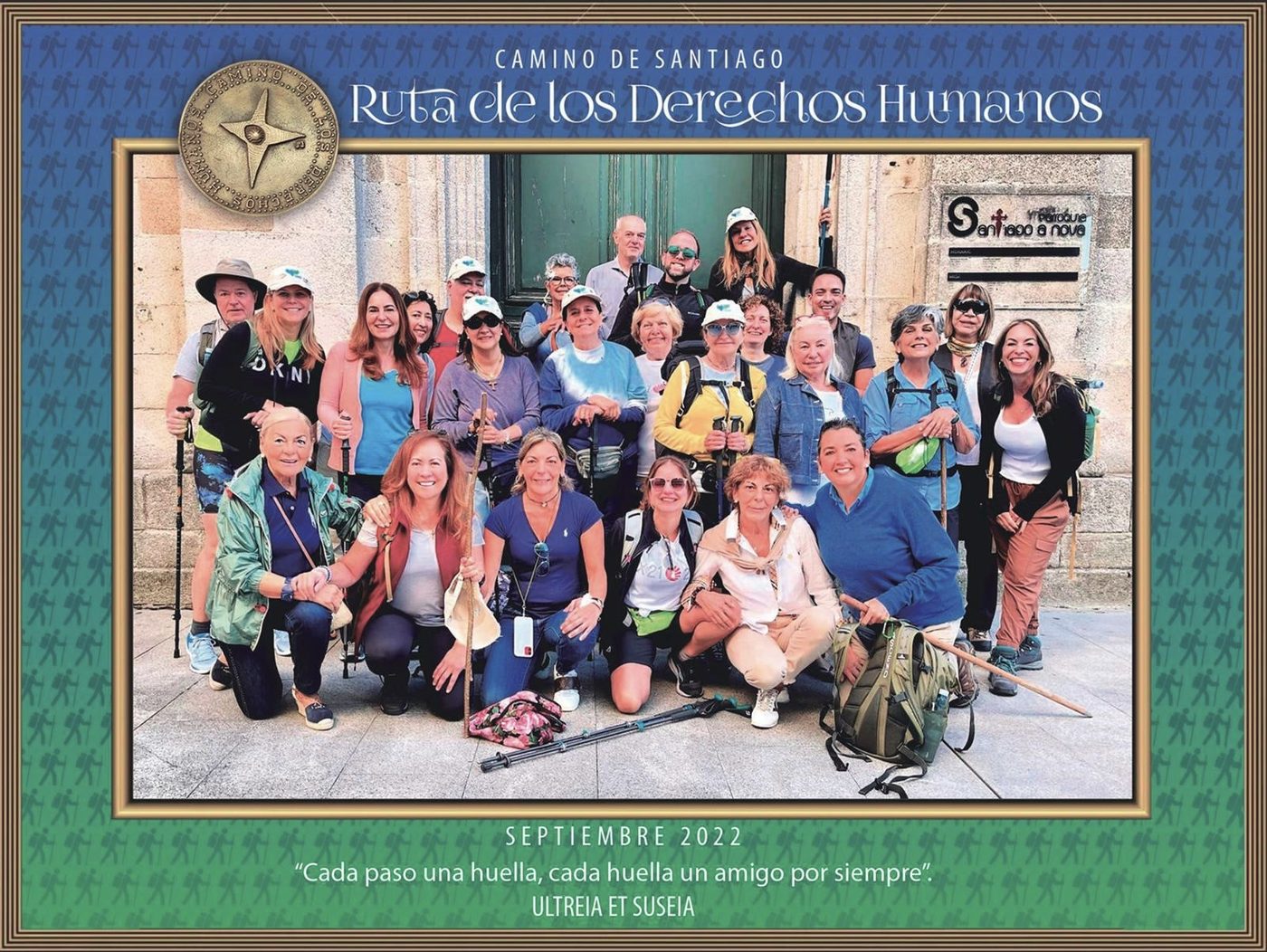
Inaugural Trip
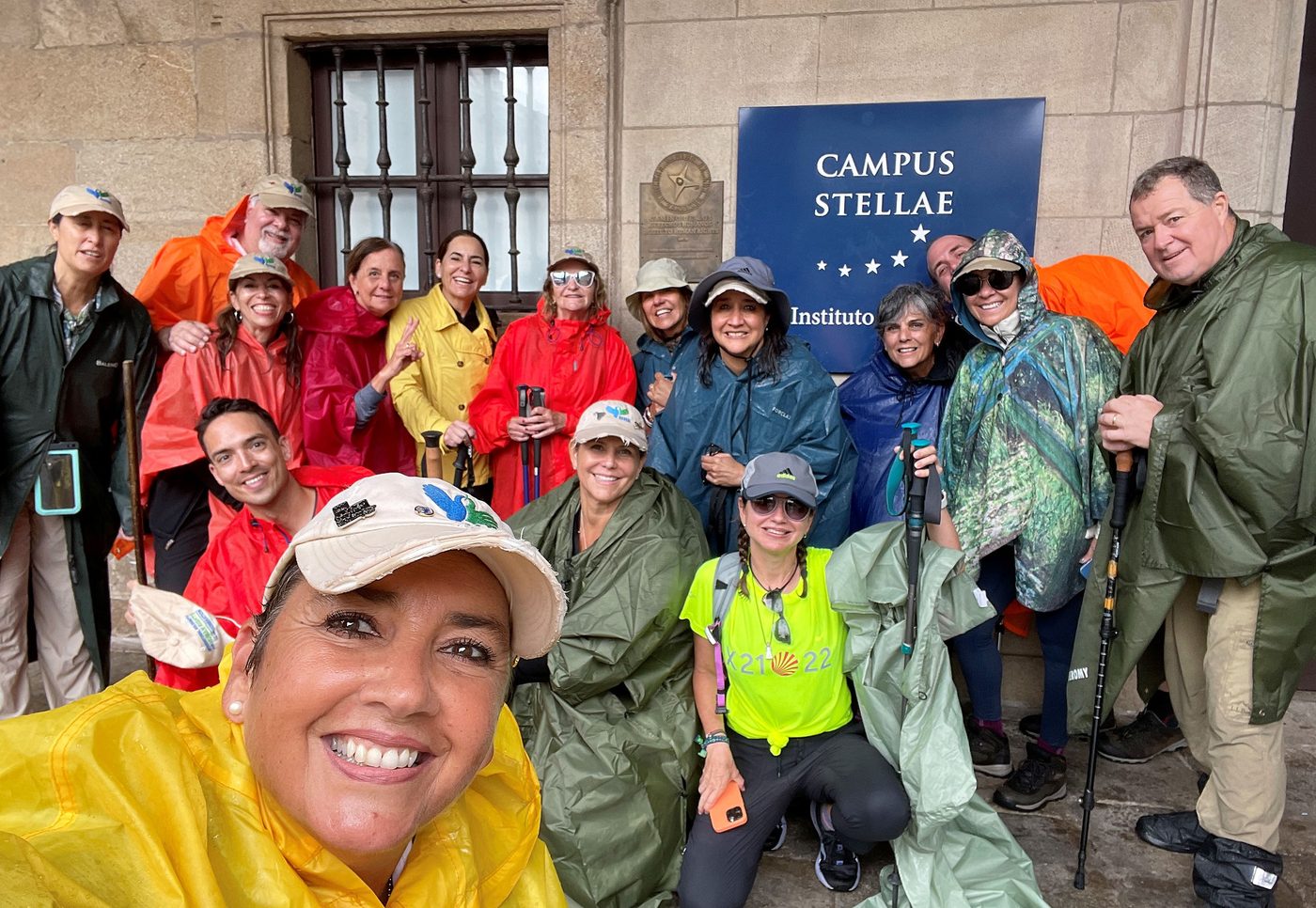
ISHRIGHTS’ inaugural journey along the route · September 2022
Walking for Human Rights, Every Year
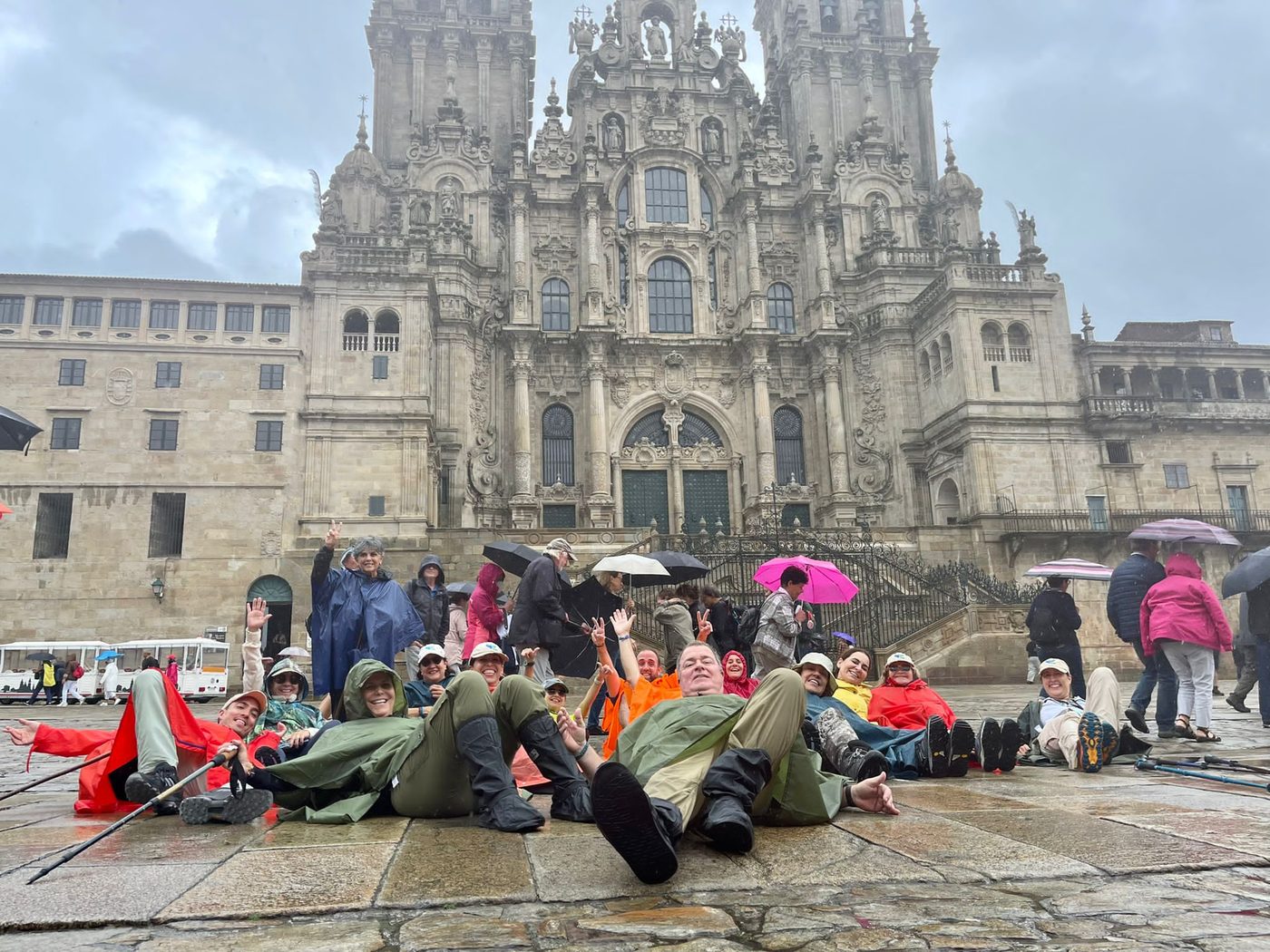
An annual pilgrimage on the Primitive Way · September–October
Every year, as autumn colors the hills of Asturias and Galicia in September and October, ISHR’s Directors, Elizabeth Sánchez Vegas and Devorah Sasha, return to the Primitive Way. They walk it with pilgrims from around the world who want to live the Camino while discovering the rights that unite us all.
Step by step, the Route comes alive: Elizabeth and Devorah share its message with everyone they meet and lovingly care for each of the 30 plaques, so every pilgrim who follows finds them shining and ready to inspire.
Would you like to join us on the Camino? For information, write to esv@ishrights.org.
Inauguration in Oviedo
September 1, 2022 · Príncipe Felipe Auditorium, Oviedo, Asturias
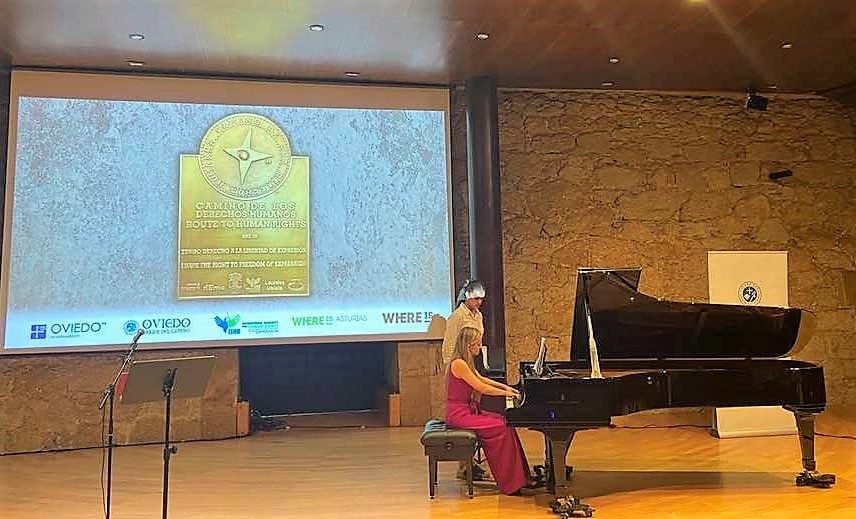
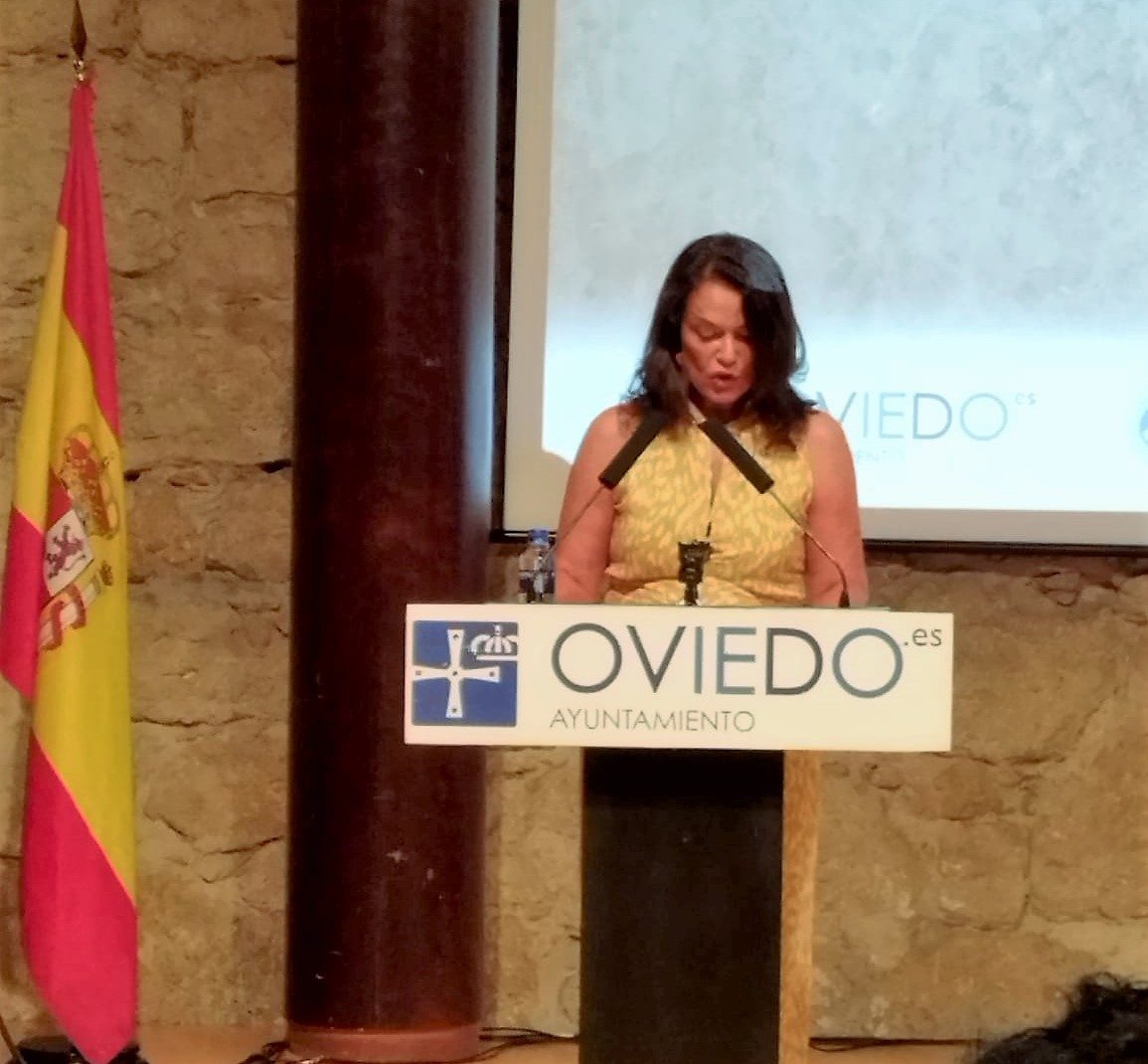
On September 1, 2022, the chamber hall of the Príncipe Felipe Auditorium in Oviedo hosted the first inaugural event of the Route to Human Rights in the Primitive Way, Europe’s first human rights route, with a recital by the renowned international pianist Isabel Pérez Dobarro, who captivated the audience with her concert and her speech.
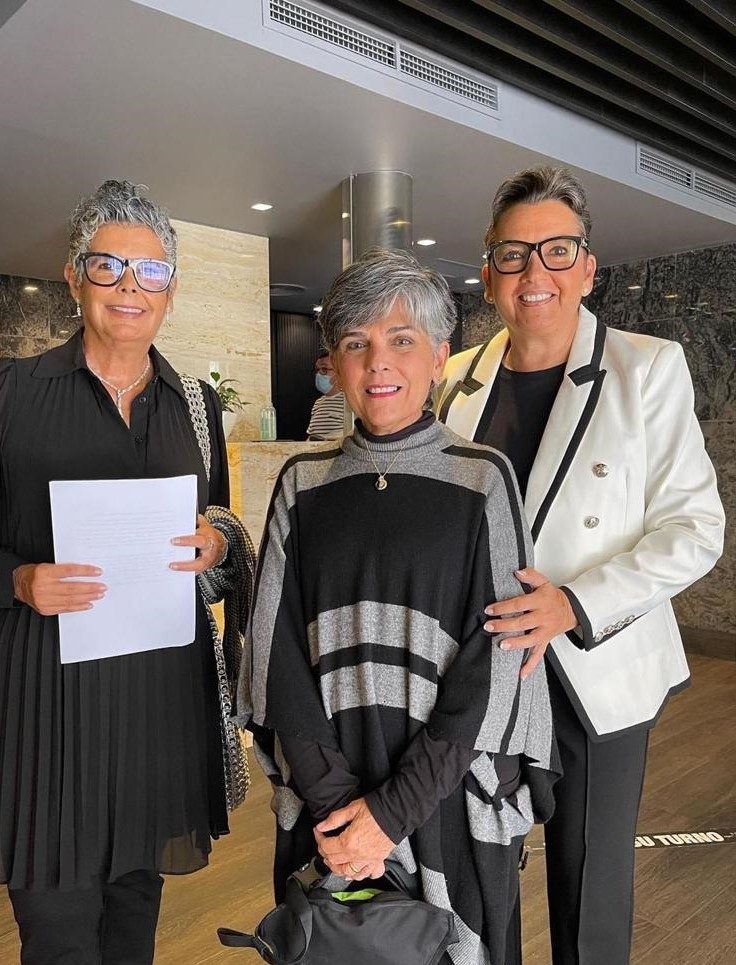
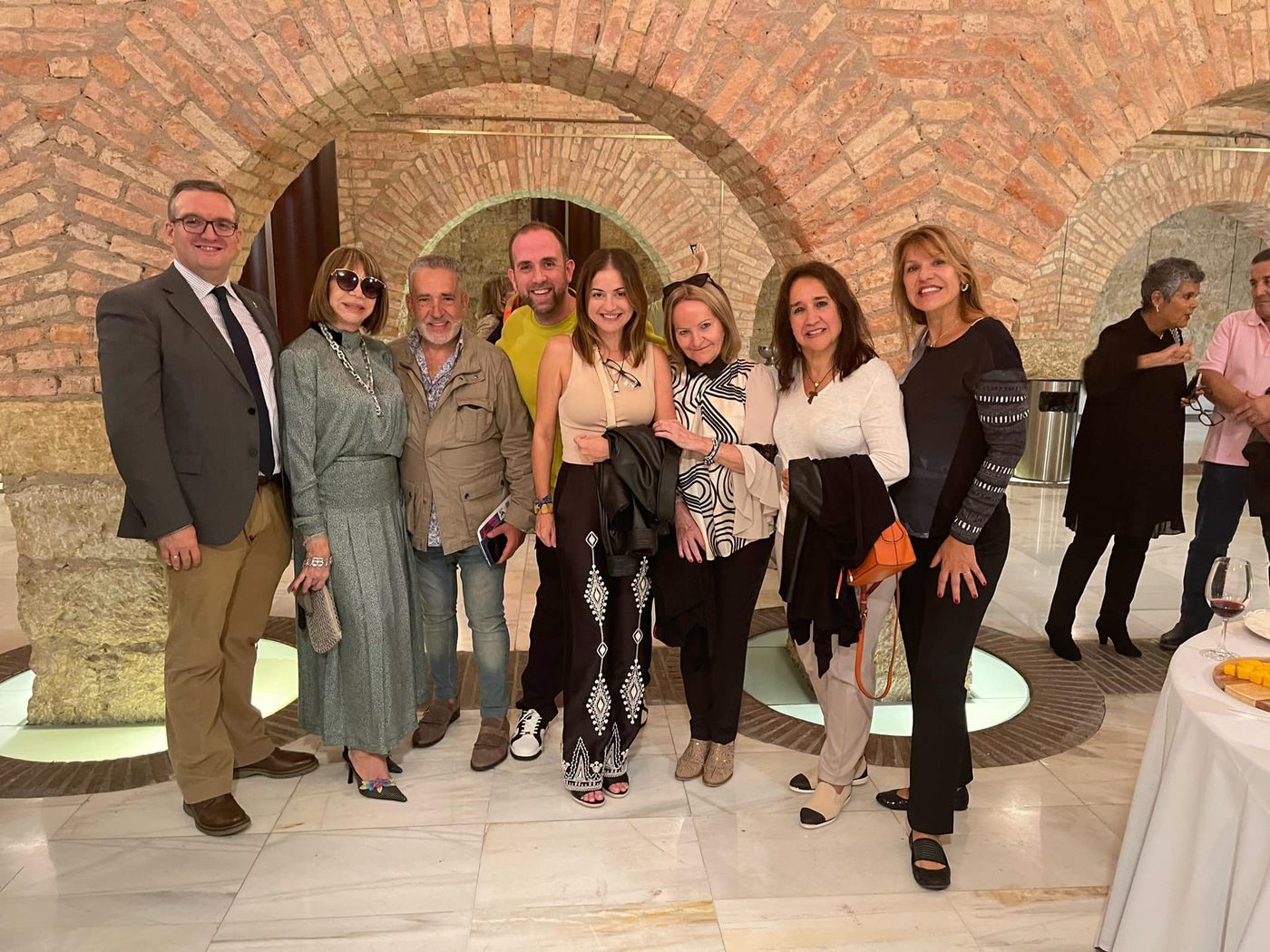
More than 300 people responded to the invitation: Oviedo City Council, authorities of the Principality of Asturias and the Xunta de Galicia, mayors and councilors of both regions, members of NGOs, business and cultural associations, and associations of Friends of the Camino de Santiago. The event also featured the premiere of the Human Rights Anthem “Perfect World,” composed especially for the occasion by the internationally recognized Italian-Venezuelan musician Pablo Manavello and performed by the international singer Devorah Sasha.
The audience heard speeches by Elizabeth Sánchez Vegas, president of International Solidarity for Human Rights; the artist Eladio de Mora (dEmo), creator of the plaques; Benjamín Alba, a pilgrim among pilgrims; José Antonio Garmón Fidalgo, Director General of Public Governance, Transparency, Citizen Participation and the 2030 Agenda; and Begoña Panea, CEO of Where is Asturias. Alfredo Sánchez Vallina was the perfect master of ceremonies. Congratulations to the team of professionals at the Príncipe Felipe Auditorium, who handled every technical detail to perfection.
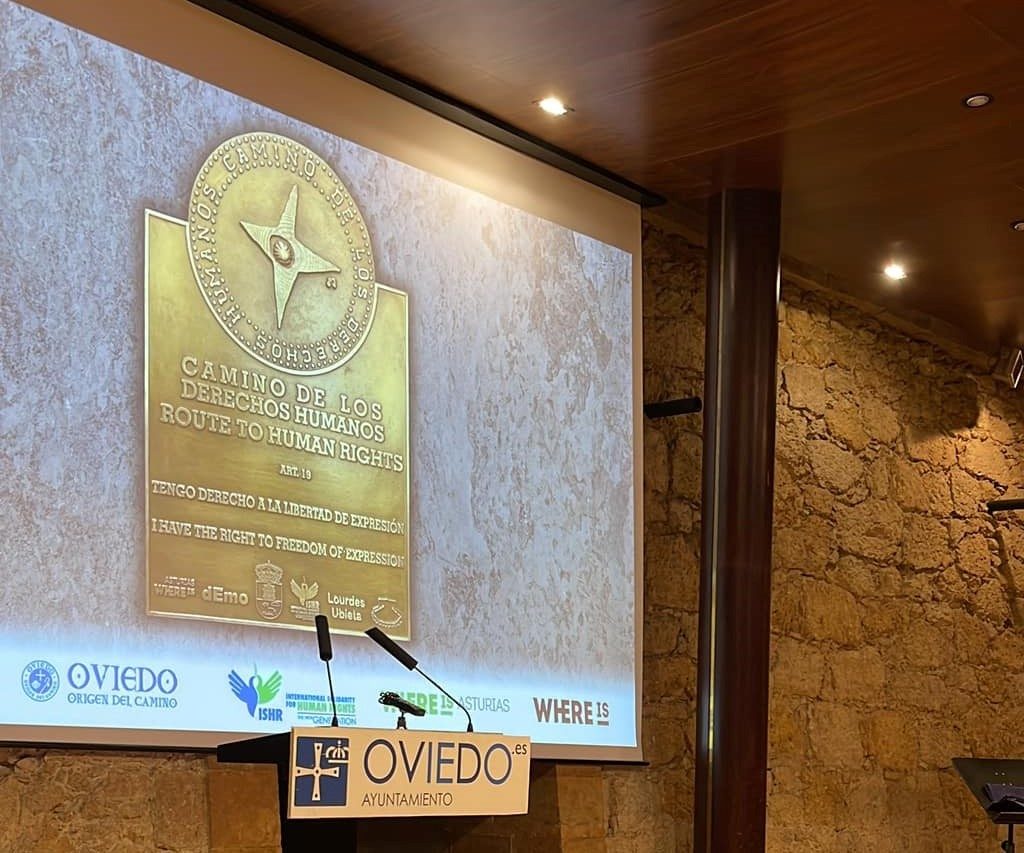
Listen to “Perfect World” and support International Solidarity for Human Rights.
Inauguration in Santiago de Compostela
September 14, 2022 · Paraninfo of the University of Santiago de Compostela, Galicia
Source: The Jacobean Academy (Academia Xacobea). Translated by Devorah Sasha.
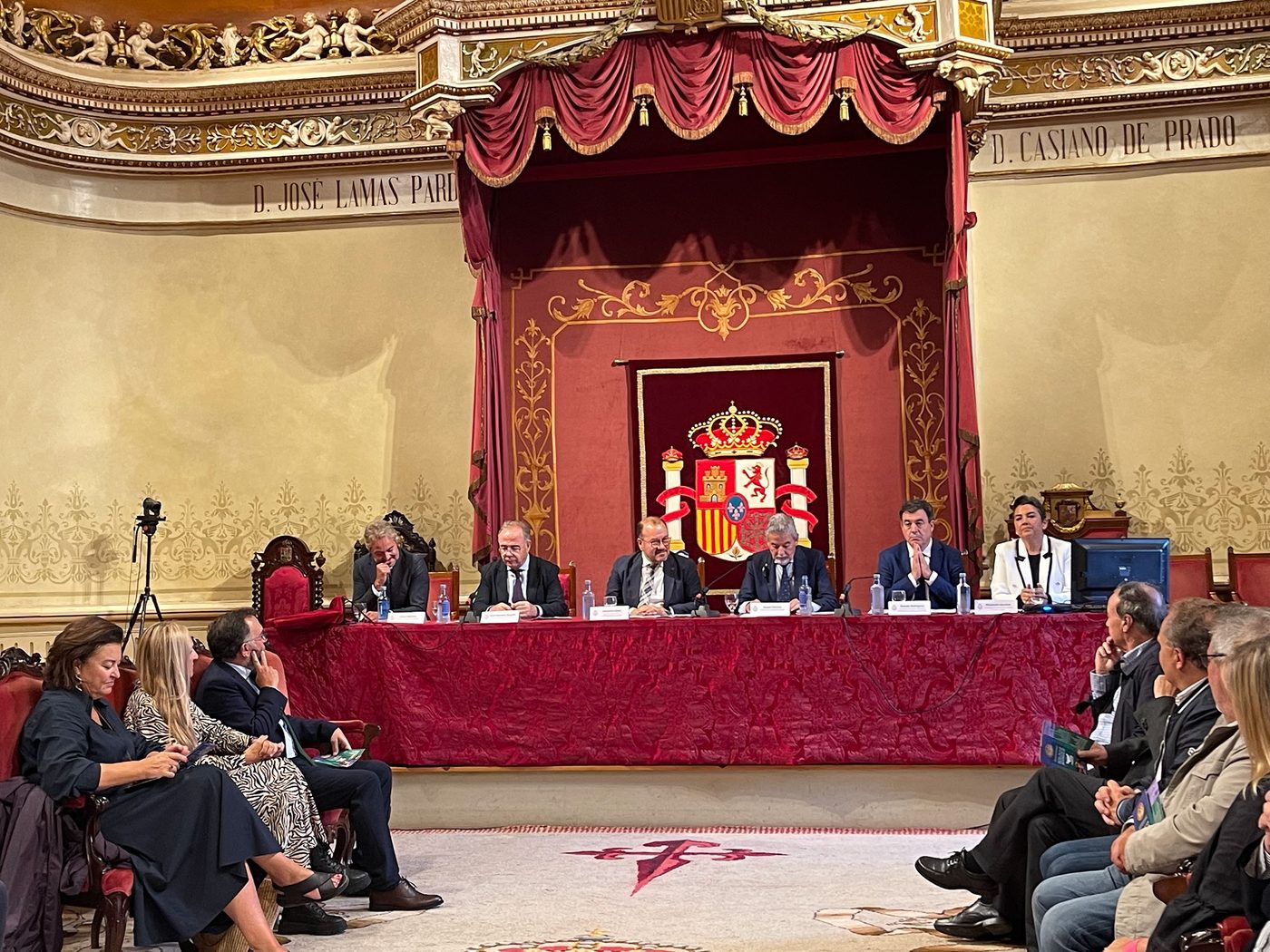
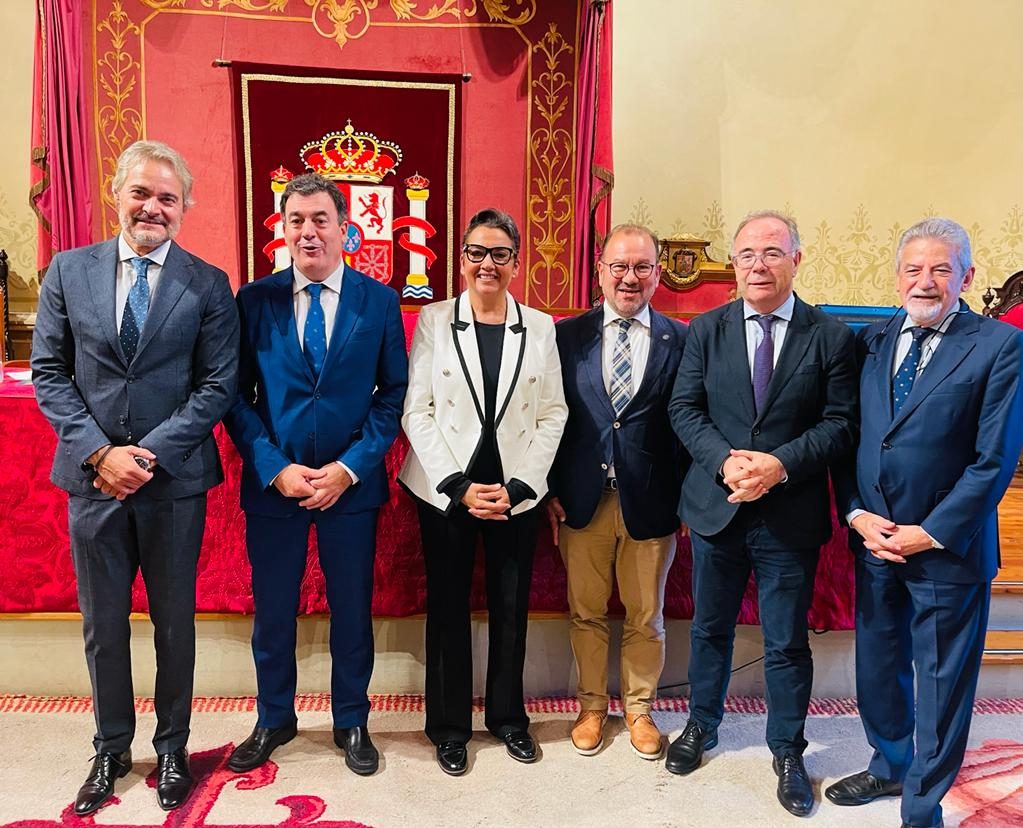
The International Solidarity for Human Rights Foundation presents a commemorative route in Santiago de Compostela that follows the Primitive Way. The Regional Minister of Culture, Román Rodríguez; the rector of the University of Santiago de Compostela, Antonio López; and the mayor of Santiago, Xosé Sánchez Bugallo, took part in the event organized by the Jacobean Academy of Santiago de Compostela on Wednesday, September 14, 2022.
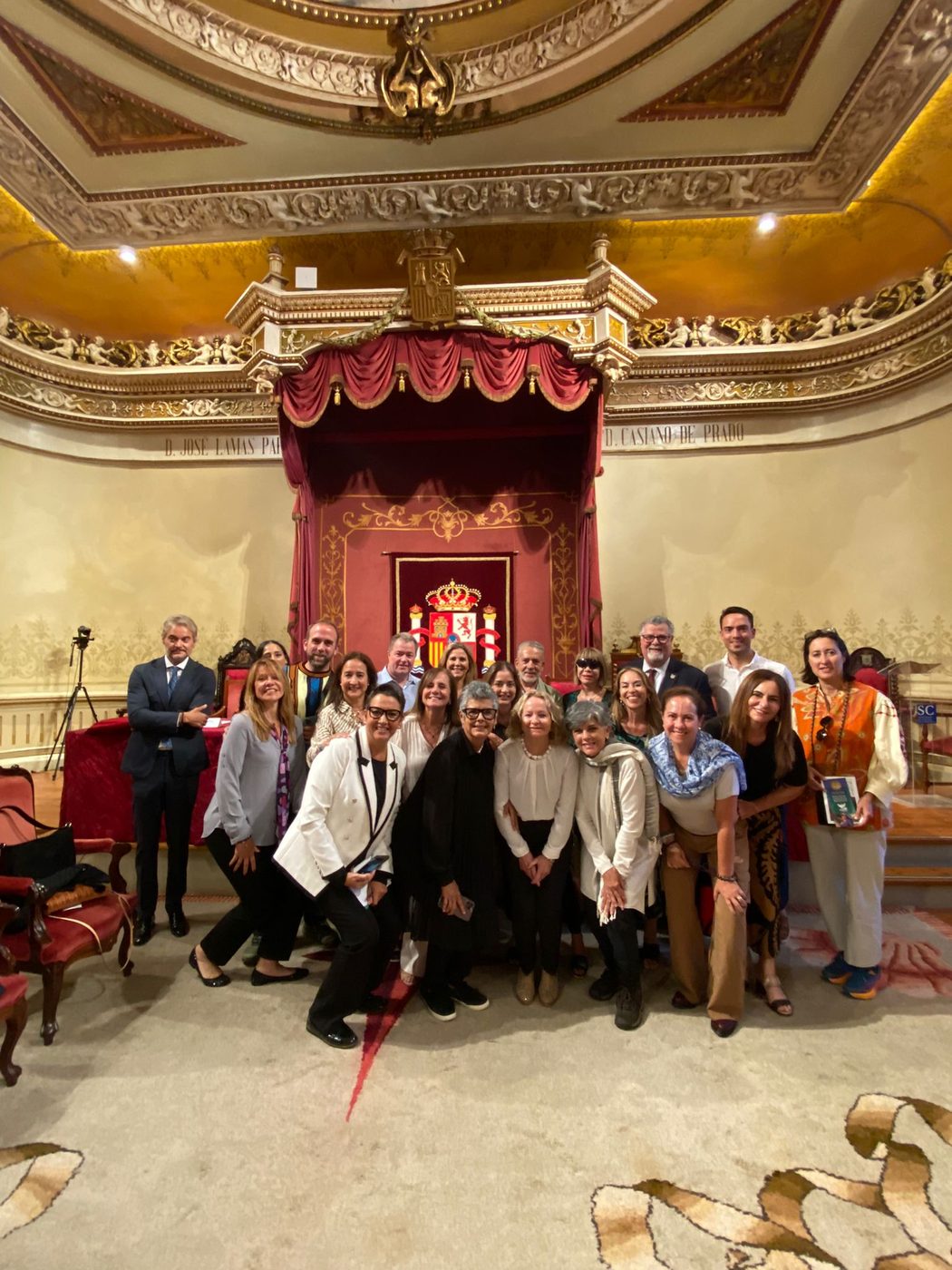
The Camino de Santiago, with its thousand-year history and universal reach, was the setting chosen by the International Solidarity for Human Rights foundation for an initiative designed to champion the importance and enduring relevance of human rights. Over the preceding days, the organization’s leaders and a group of pilgrims from different countries traveled the Primitive Way, visiting the 30 commemorative plaques in the municipalities it crosses, as many as there are articles in the Universal Declaration of Human Rights, adopted by the UN almost 75 years ago.
That afternoon in Santiago de Compostela, the final stage of the Primitive Way, the Route to Human Rights in the Primitive Way was officially launched together with the Jacobean Academy. Presiding over the event, held in the Paraninfo of the University of Santiago de Compostela, were the Regional Minister of Culture, Education, Vocational Training and Universities, Román Rodríguez; the mayor of Santiago, Xosé Sánchez Bugallo; the rector of the University, Antonio López; the president of the Jacobean Academy, Xesús Palmou; the academy’s secretary, Ulises Bértolo; and the president of International Solidarity for Human Rights, Elizabeth Sánchez Vegas. The Human Rights Anthem “Perfect World” was presented and sung by the singer Devorah Sasha, founder and executive director of International Solidarity for Human Rights.
The 30 Plaques
Plaques and installations along the Primitive Way
Each plaque represents one article of the Universal Declaration of Human Rights and is engraved with a short version of that right in Spanish and English. The plaque for Article 1 is in Oviedo and the plaque for Article 30 is in Santiago de Compostela: fifteen plaques were placed along the Primitive Way in Asturias and fifteen in Galicia. Click any plaque to enlarge it.
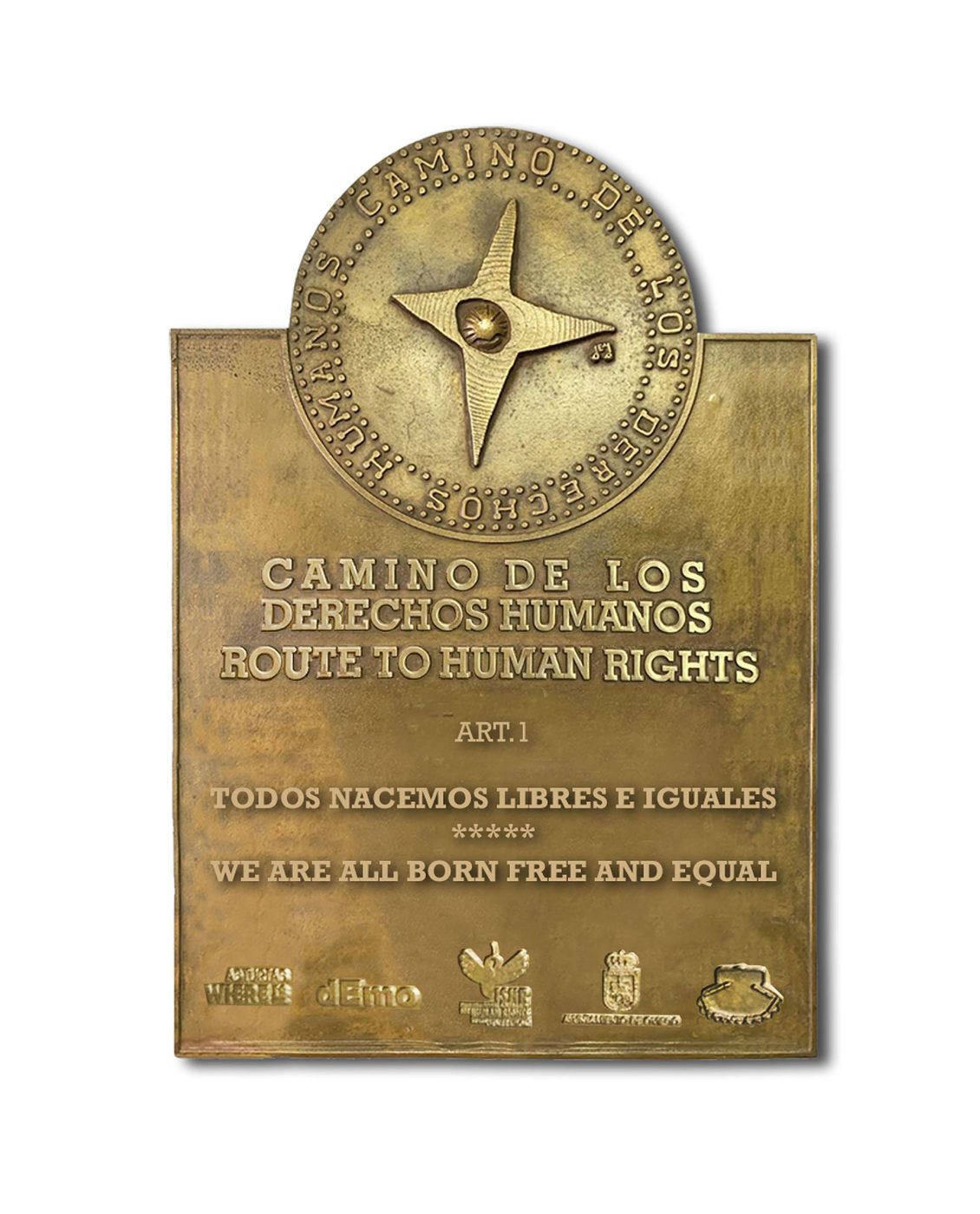
We are all born free and equal
Location: Colegio Dolores Medio, C. Luna, 4, 33001 Oviedo, Asturias, Spain.
Sponsor: Eladio de Mora (dEmo), Madrid, Spain
The plaque is on the façade of the Colegio Dolores Medio elementary school.
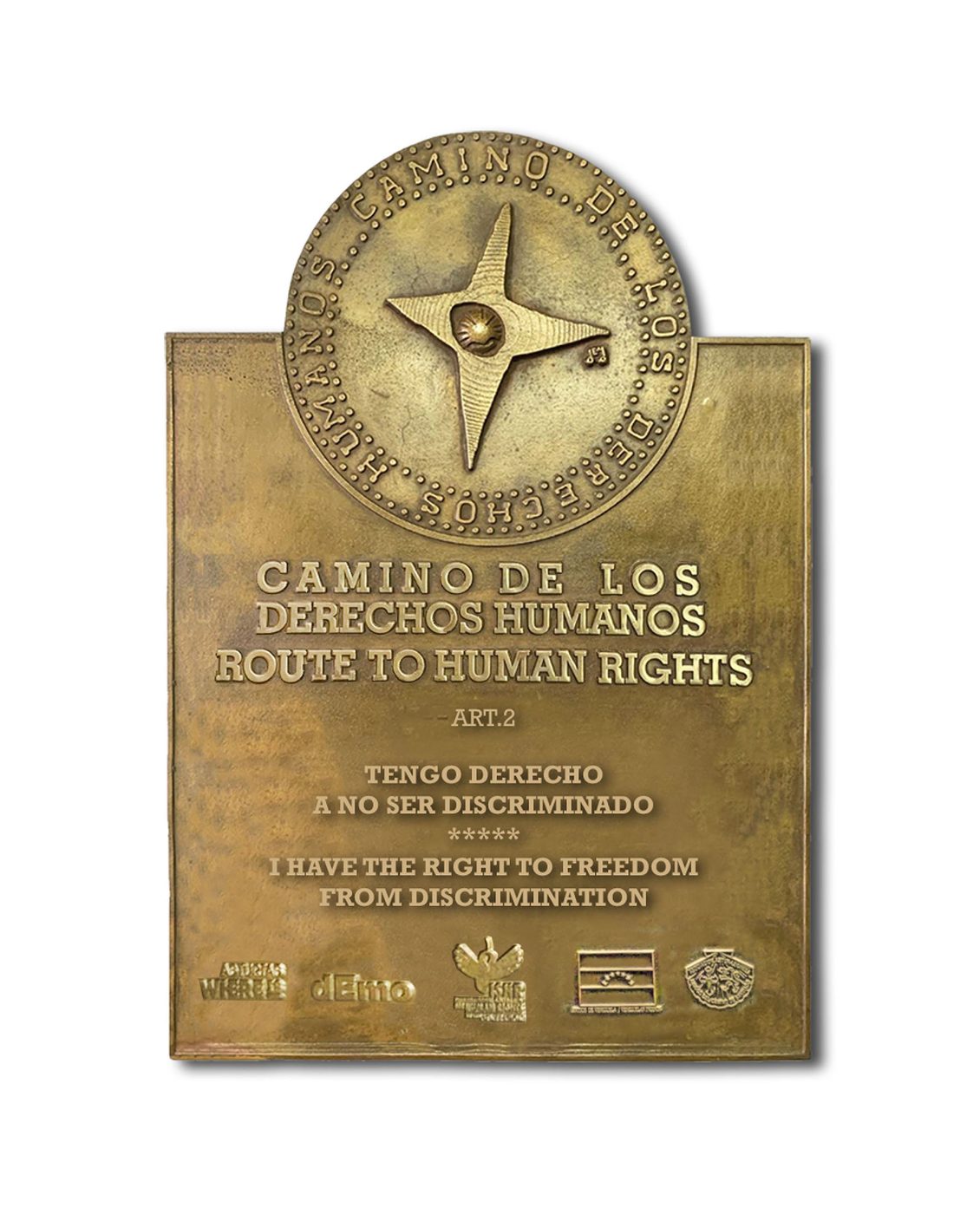
Freedom from discrimination
Location: El Salvador Pilgrims’ Hostel (Albergue de Peregrinos de El Salvador), C. Leopoldo Alas, 20, 33008 Oviedo, Asturias, Spain.
Sponsor: Friends of Venezuela, Caracas, Venezuela, and Miami, FL, United States
The hostel is reserved for pilgrims with credentials who are walking the Primitive Way and is managed by the Astur-Leonesa Association of Friends of the Camino.
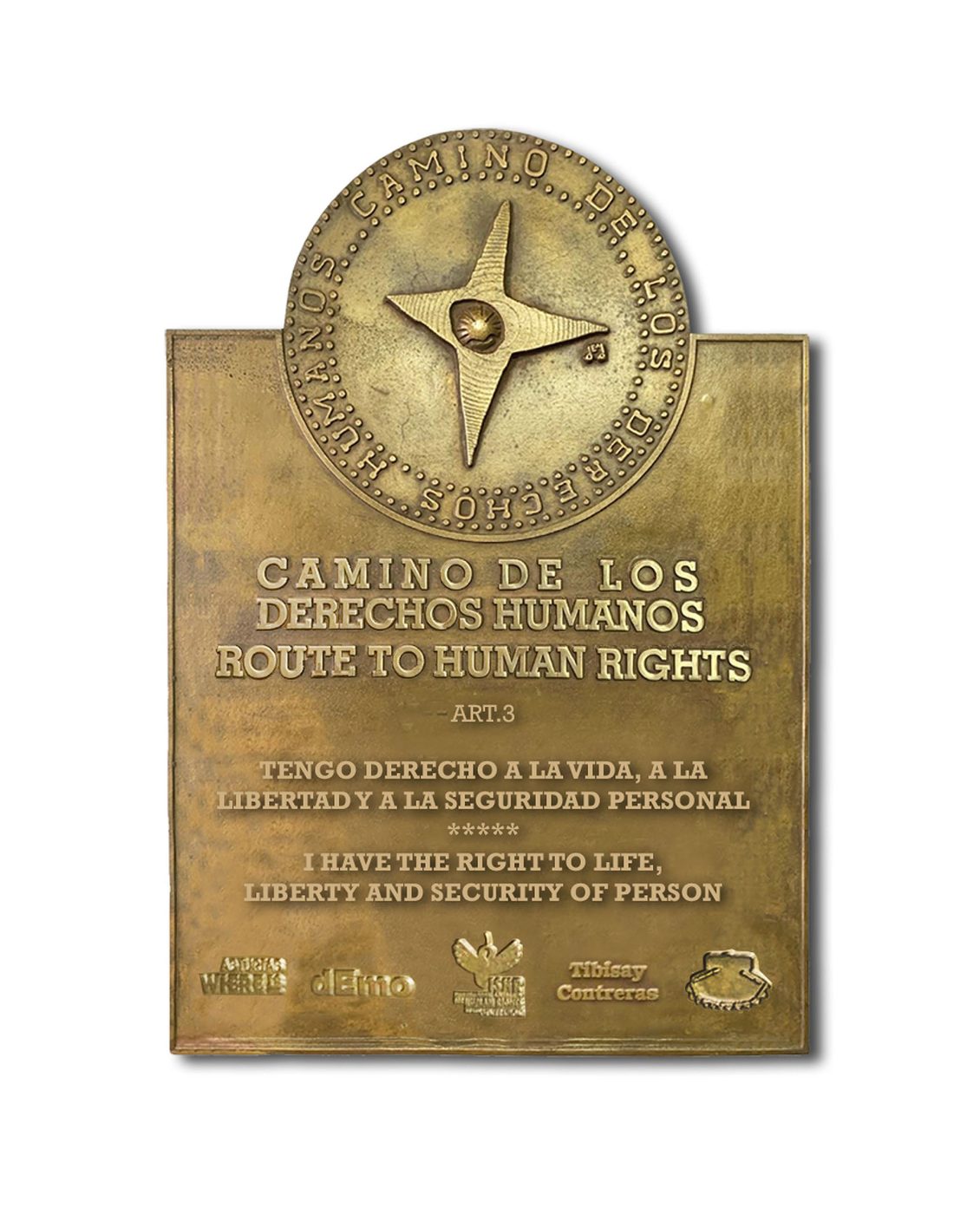
I have the right to life, liberty and security of person
Location: Casona Vidal, Cimadevilla Street, Grado, Asturias, Spain.
Sponsor: Excma. Sra. Dña. Tibisay Contreras, Fort Myers, FL, United States
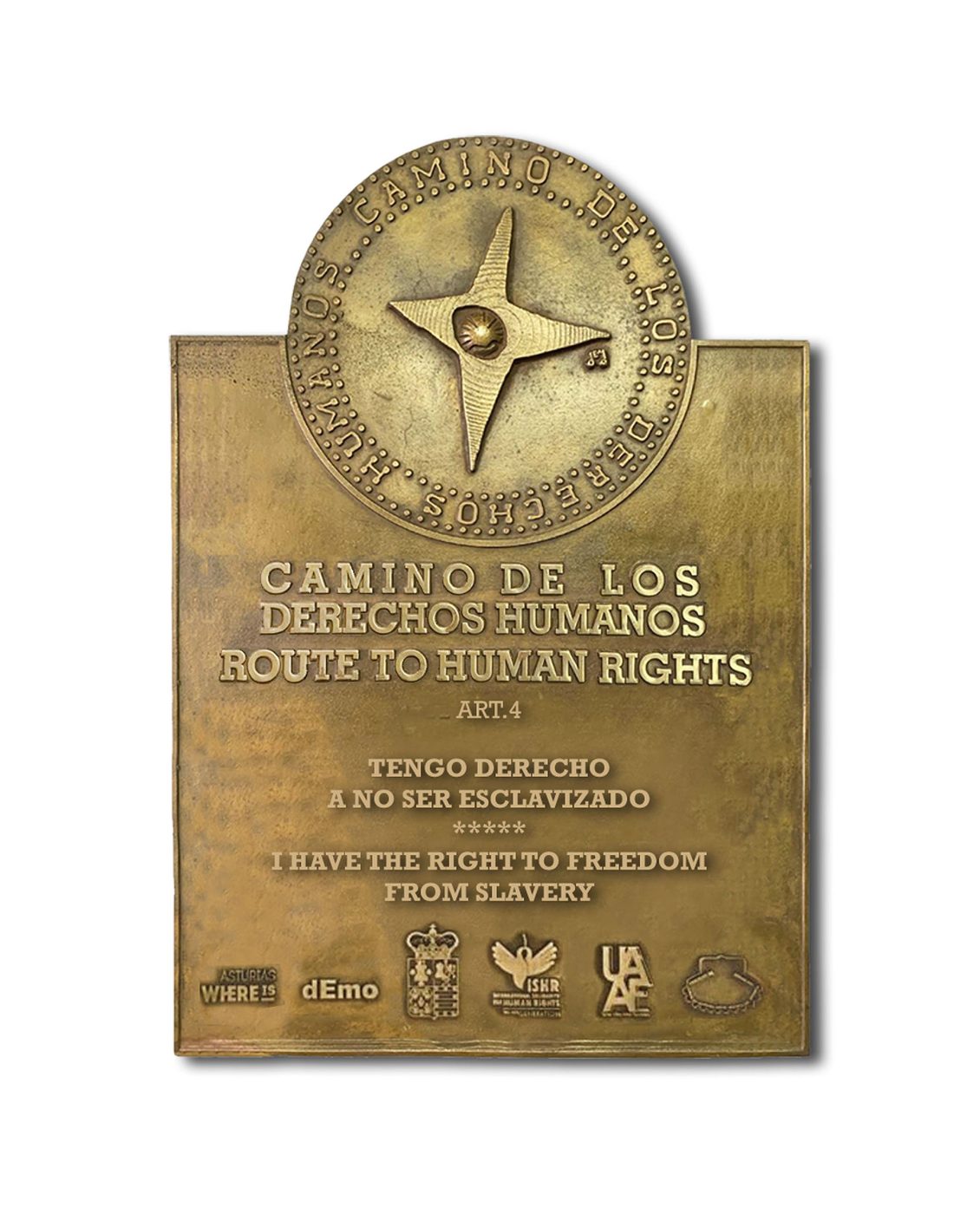
I have the right to freedom from slavery
Location: Pilgrims’ hostel of the Monastery of Cornellana, Cornellana, Salas, Asturias, Spain.
Sponsor: Olga Ortiz Mera, President of United Aliens Artist Foundation, Miami, FL, United States
The Royal Monastery of San Salvador de Cornellana is magnificent, majestic and legendary.
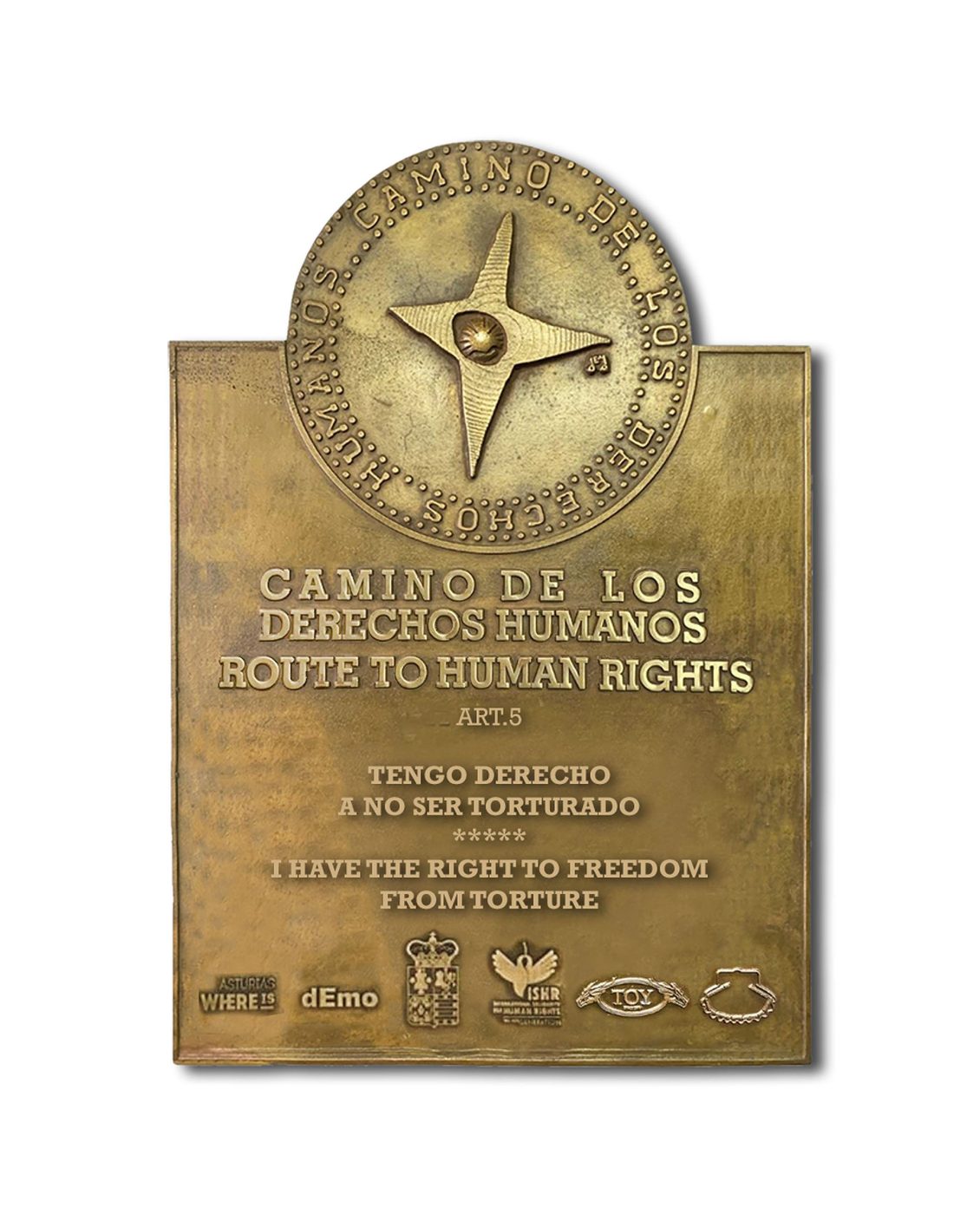
I have the right to freedom from torture
Location: Valdés-Salas Castle, Plaza La Campa, 1, 33860 Salas, Asturias, Spain.
Sponsor: TOY Foundation, Zürich, Switzerland
The 16th-century castle is attached to the 15th-century Valdés Tower. It belonged to the noble Valdés Salas family, whose best-known member, Fernando Valdés Salas, was a cleric, inquisitor, politician and founder of the University of Oviedo.
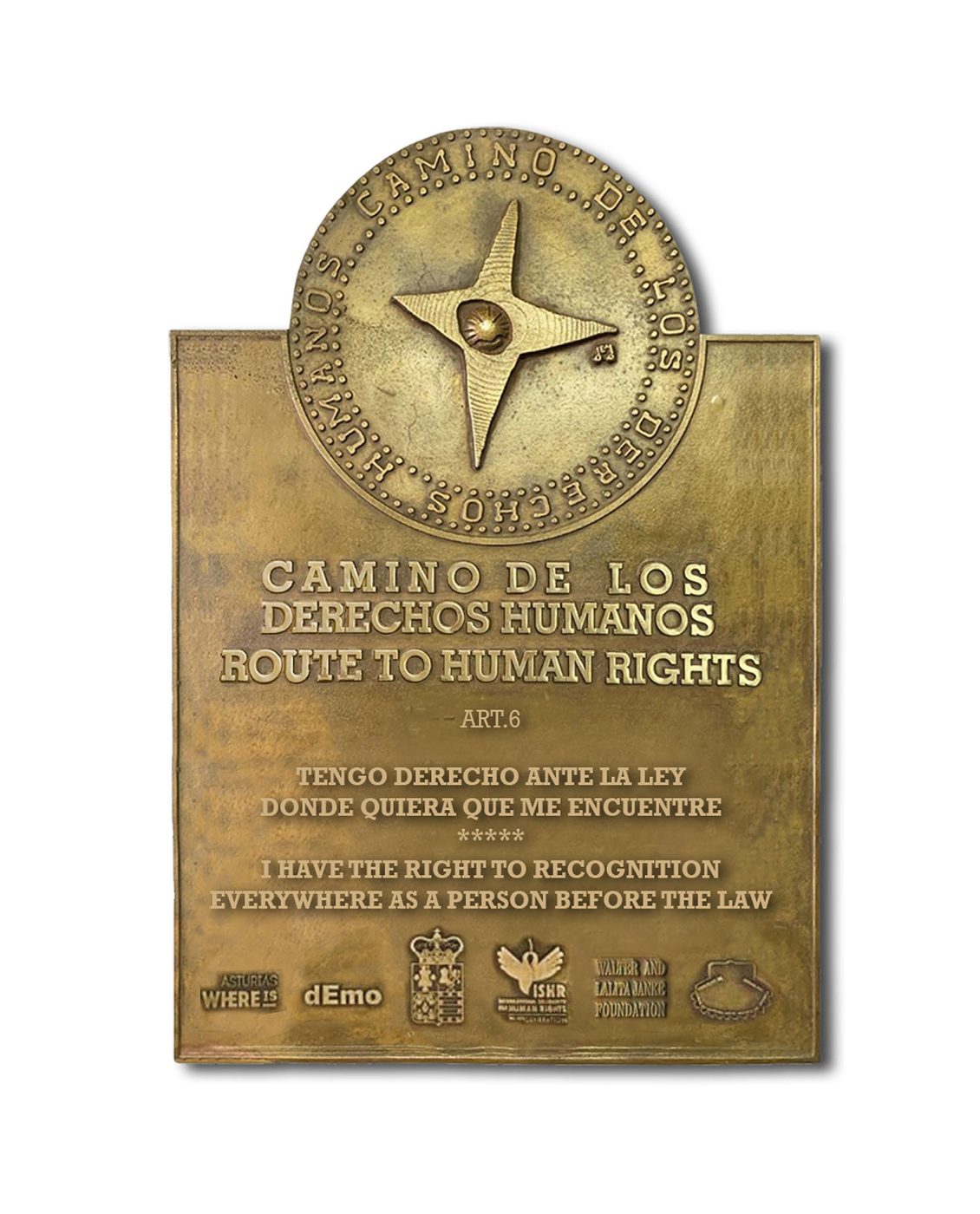
I have the right to recognition everywhere as a person before the law
Location: Colegio Público C.R.A. Eugenia Astur, La Espina, 704, 33891 La Espina, Asturias, Spain.
Sponsor: Walter & Lalita Janke Foundation, Vero Beach, FL, United States
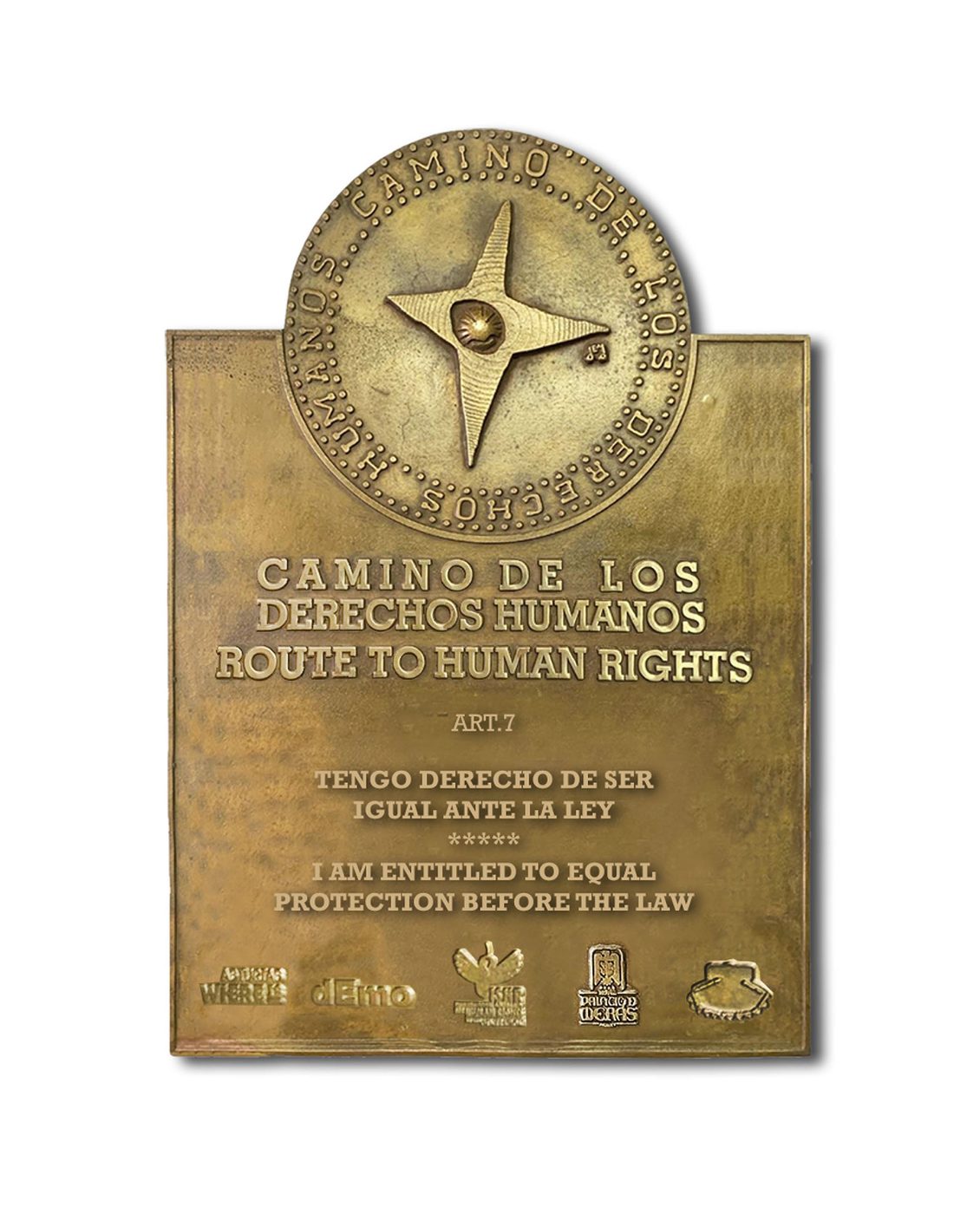
I am entitled to equal protection before the law
Location: Hotel Palacio de Meras, Calle Pío Cuervo, 33870 Tineo, Asturias, Spain.
Sponsor: D. Benjamín Alba Menéndez, Asturias, Spain
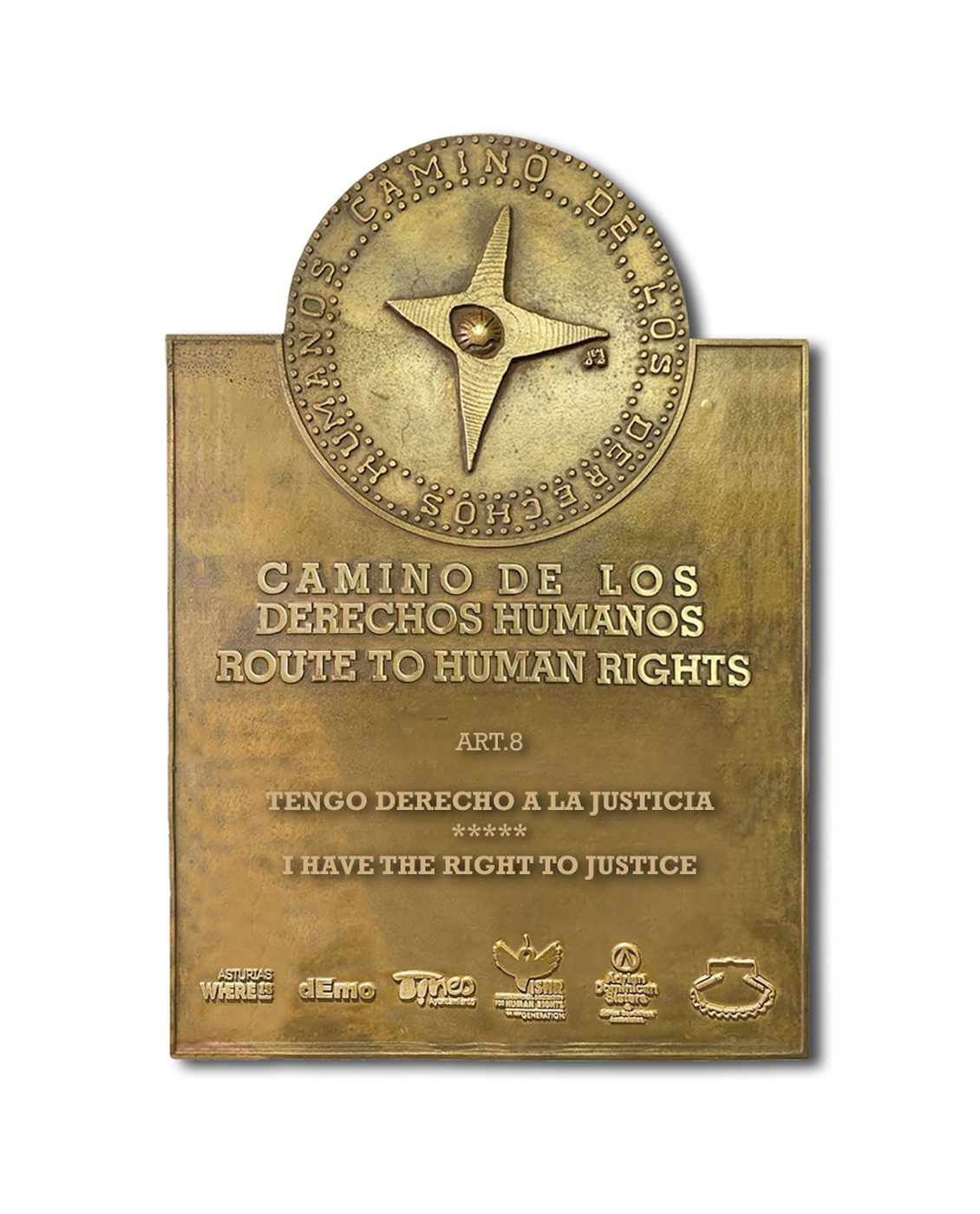
I have the right to justice
Location: Ermita de San Pascual Baylón chapel, Tineo, Asturias, Spain.
Sponsor: Adrian Dominican Sisters, Adrian, Michigan, United States
This square chapel with a front portico dates from the 16th and 17th centuries and houses a Baroque altarpiece in polychrome wood. A beautiful image of the Virgin Mary stood here until it was stolen at the end of the last century; it was replaced by the current image, flanked by wooden figures of San Pascual and San Jorge. Above is a crucified Christ, flanked by the coats of arms of the houses of Maldonado and Tineo.
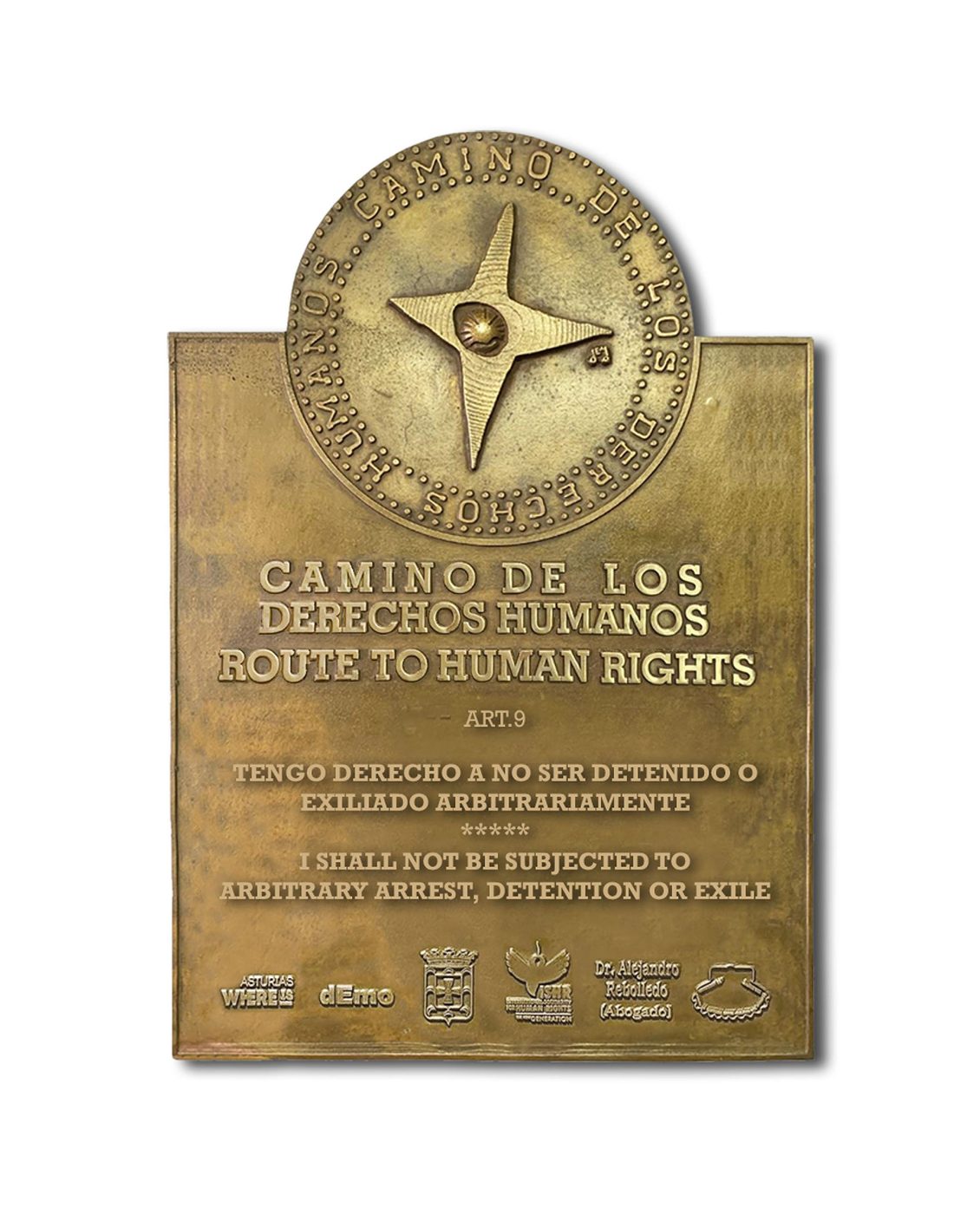
I shall not be subjected to arbitrary arrest, detention or exile
Location: Parque El Toral, 33889 Pola de Allande, Asturias, Spain.
Sponsor: Dr. Alejandro Rebolledo, Miami, FL, United States
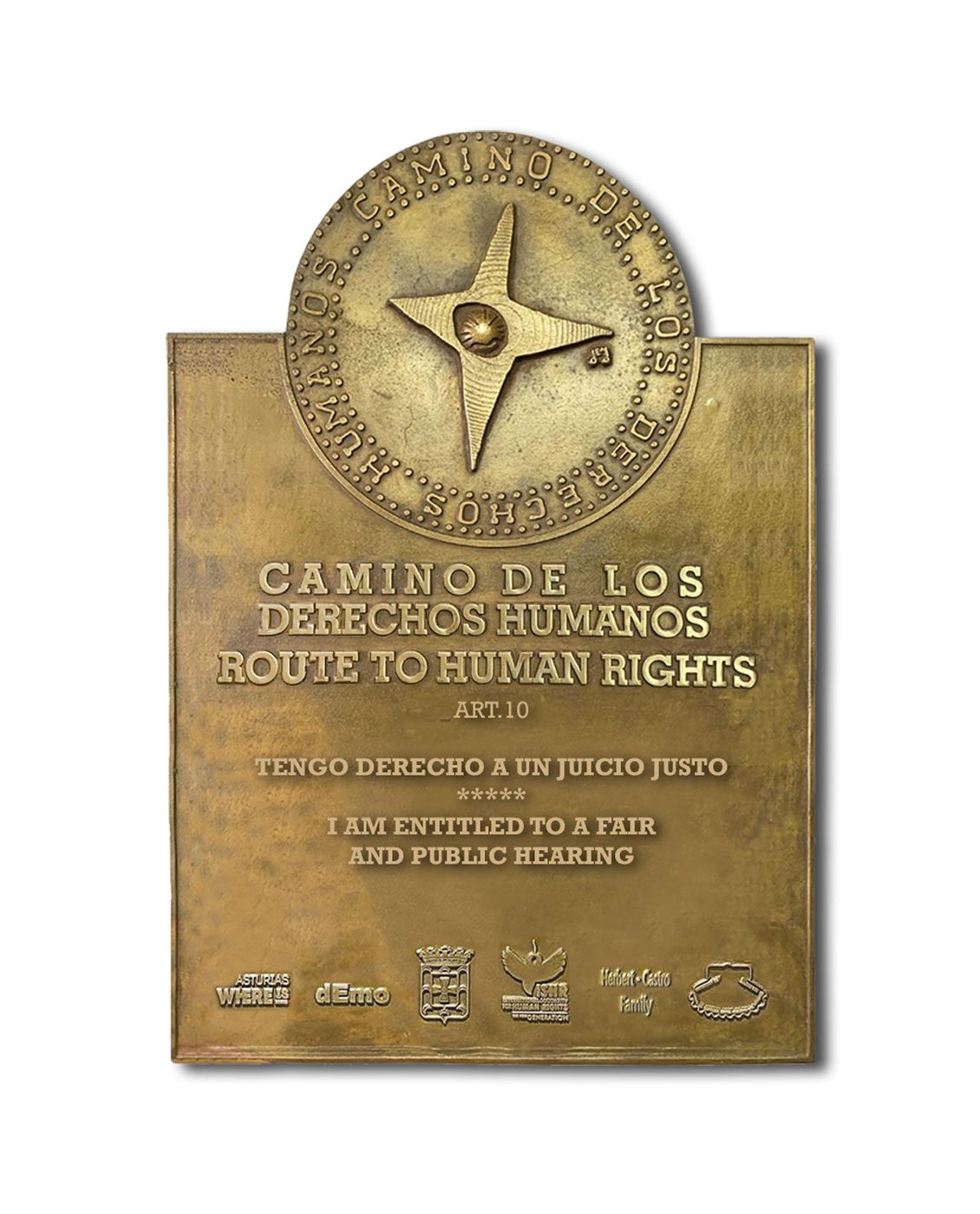
I am entitled to a fair and public hearing
Location: Puerto del Palo, Pola de Allande, Asturias, Spain.
Sponsor: Herbert-Castro Family, Boca Raton, FL, United States
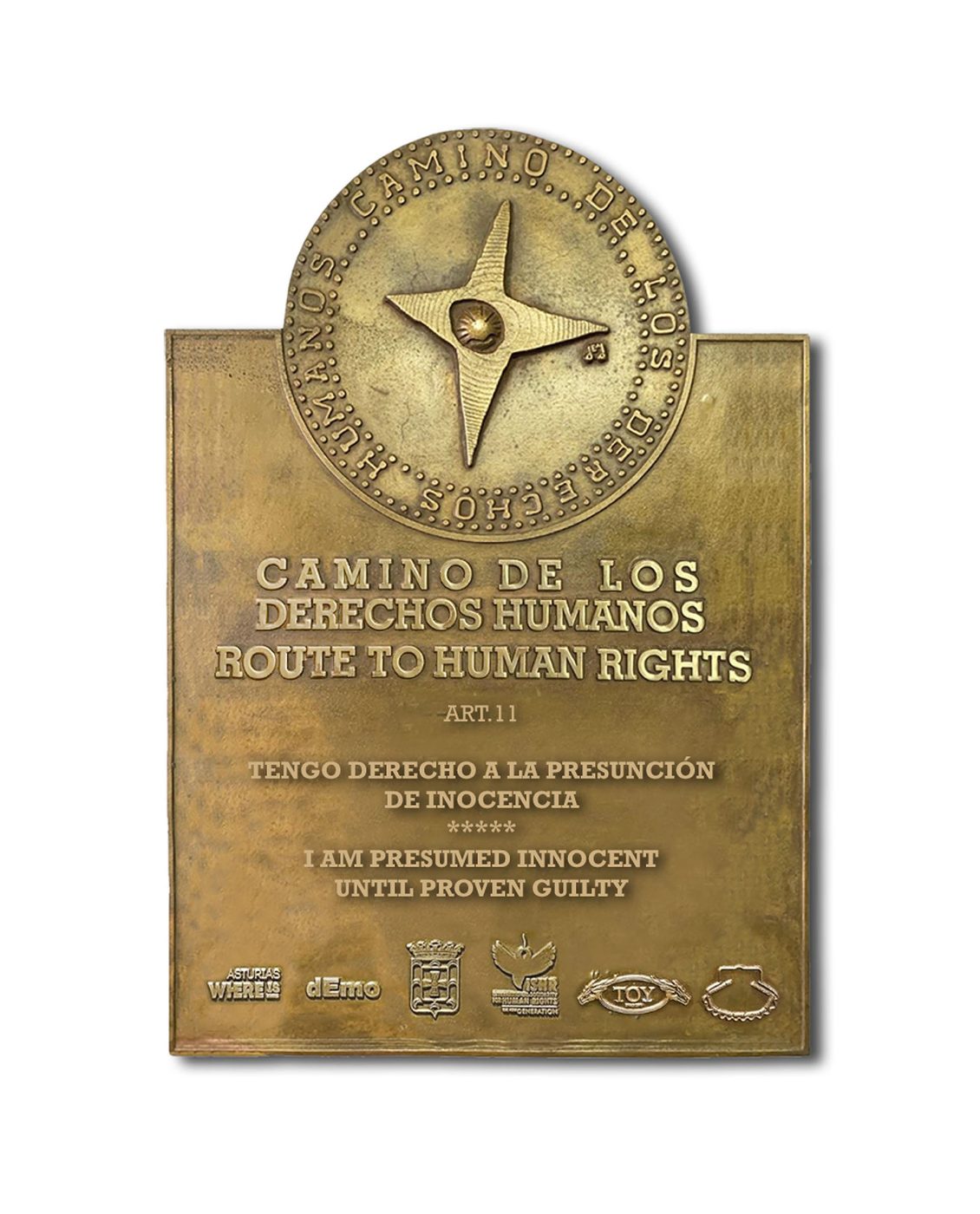
I am presumed innocent until proven guilty
Location: Plaza de la Iglesia de Santa María, Berducedo, Pola de Allande, Asturias, Spain.
Sponsor: TOY Foundation, Zürich, Switzerland
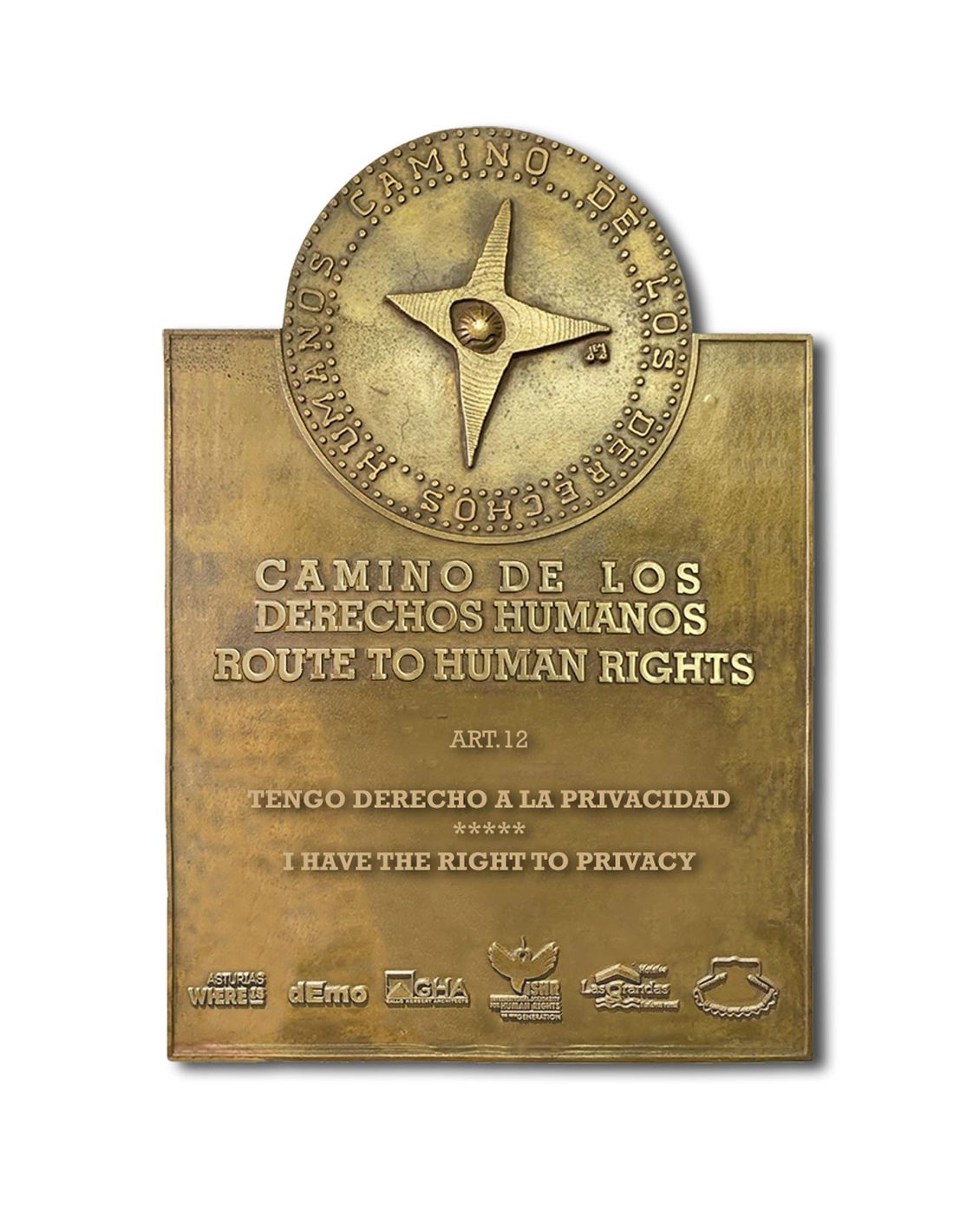
I have the right to privacy
Location: Hotel Las Grandas, 33730 Vistalegre, Grandas de Salime, Asturias, Spain.
Sponsor: Gallo Herbert Architects, Deerfield Beach, FL, United States
The nearby Salime reservoir, a colossal construction built to produce electricity, is one of the finest and most monumental examples of Asturias’s industrial heritage.
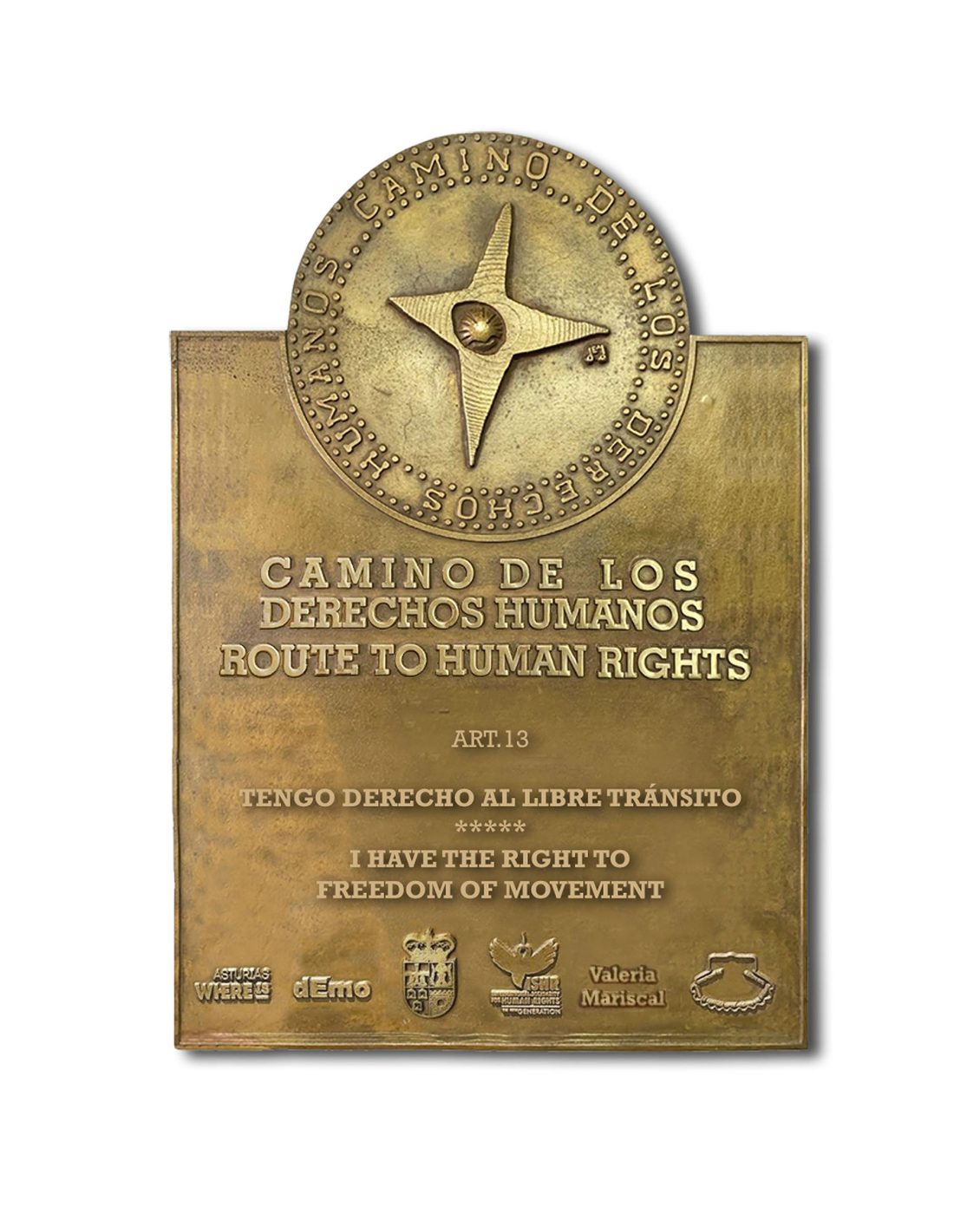
I have the right to freedom of movement
Location: Façade of the Town Hall of Grandas de Salime, Pl. de la Constitución, 1, 33730 Grandas de Salime, Asturias, Spain.
Sponsor: Valeria Mariscal, Boca Raton, FL, United States
Grandas de Salime is an exemplary town in Asturias.
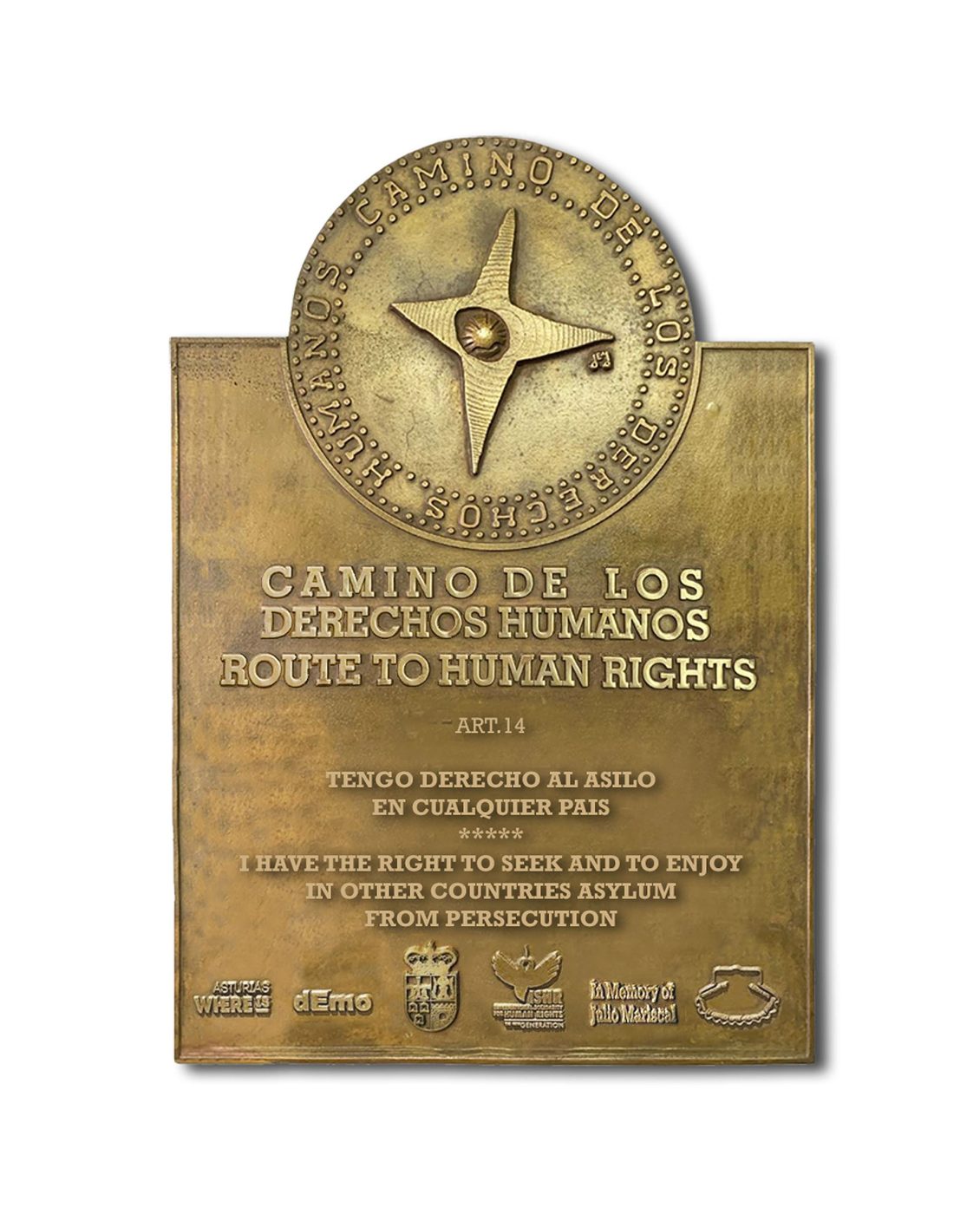
I have the right to seek and to enjoy in other countries asylum from persecution
Location: Castro Youth Hostel, Castro, s/n, 33730 Grandas de Salime, Asturias, Spain.
Sponsor: Valeria Mariscal, Mexico City, Mexico
Opened in 1990, this private hostel for pilgrims and tourists occupies an old two-storey stone house that was once the school for Castro and the surrounding villages. It is 5 km from Grandas de Salime and very close to the archaeological site of Castro del Chao Samartín.
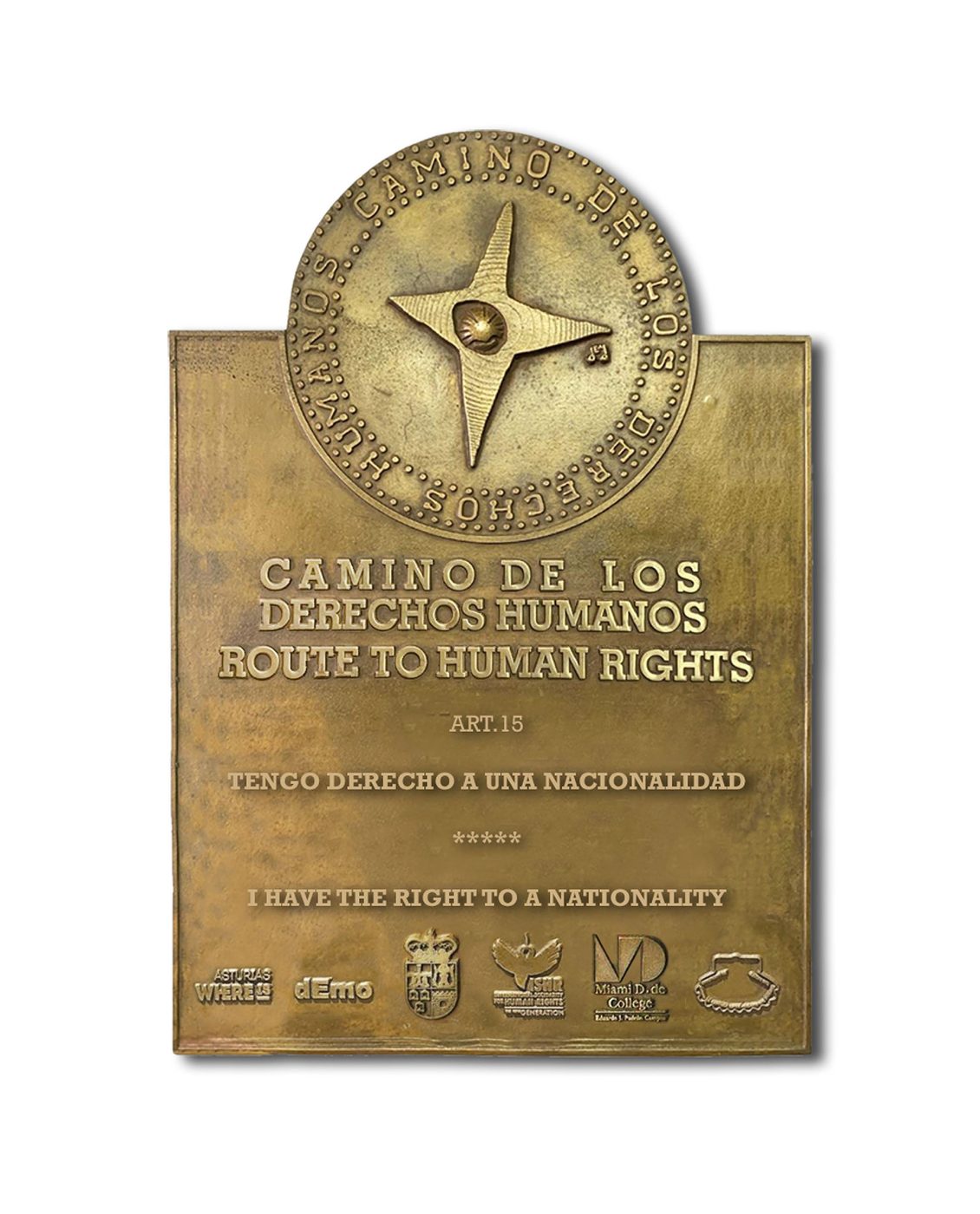
I have the right to a nationality
Location: Church of Santa María Magdalena de Penafonte, La Mesa, 33887 Grandas de Salime, Asturias, Spain.
Sponsor: Miami Dade College – Eduardo J. Padrón Campus Student Government Association (SGA), Miami, FL, United States
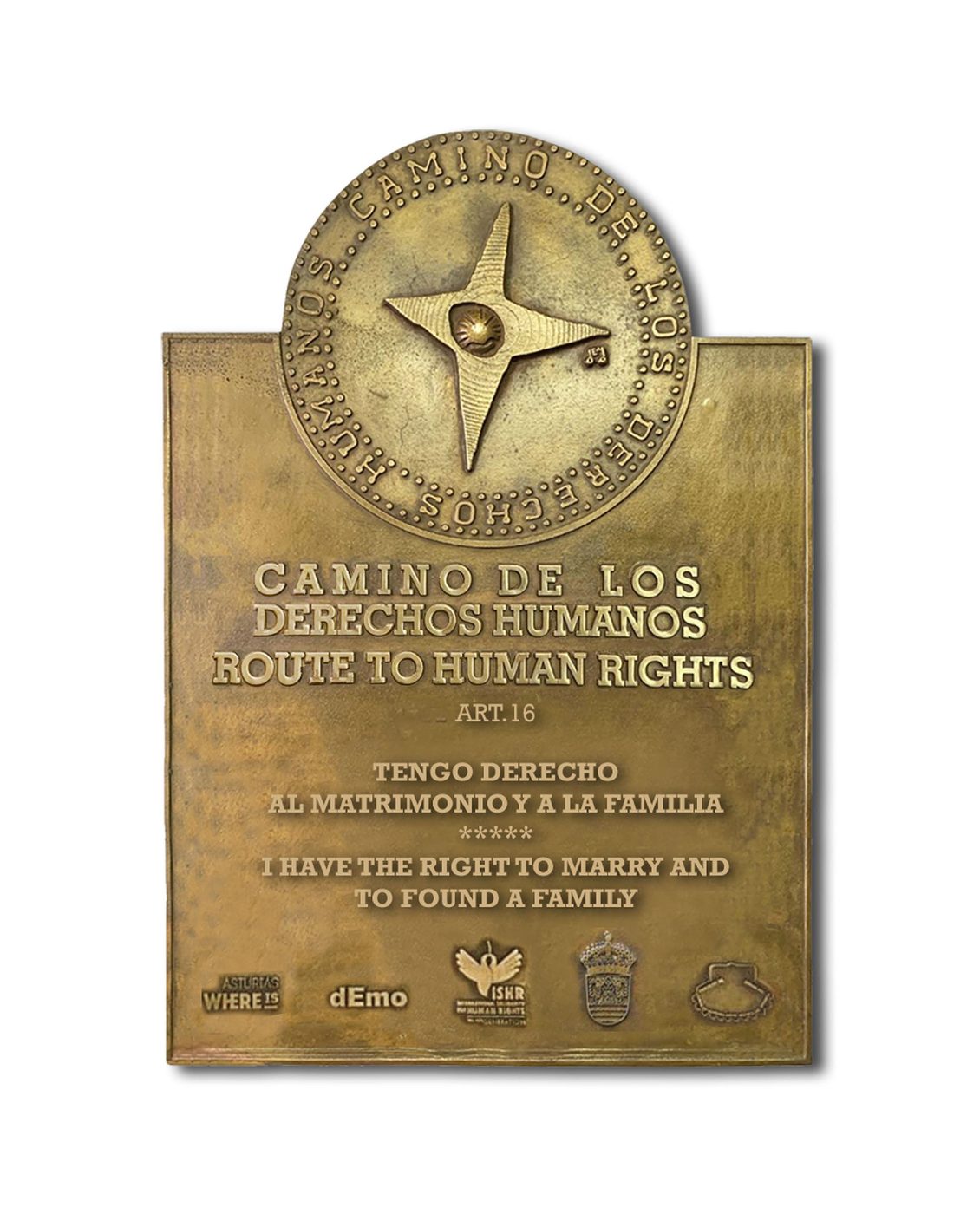
I have the right to marriage and to found a family
Location: Casa de Pasarín, a public pilgrims’ hostel of the Xunta de Galicia, C/ San Roque, 4, A Fonsagrada, Galicia, Spain.
Sponsor: Concello da Fonsagrada, Galicia, Spain
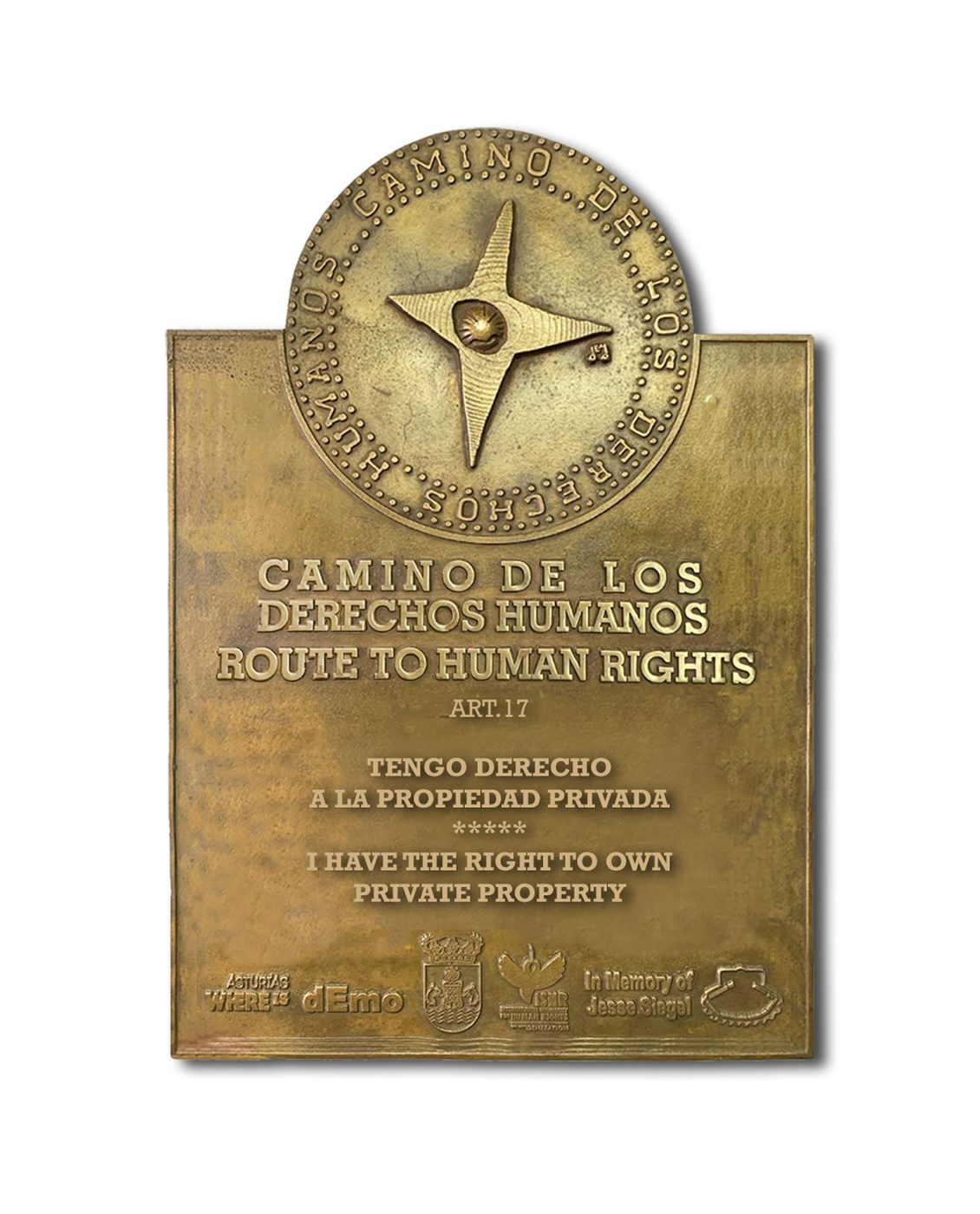
I have the right to own private property
Location: Chapel of the Royal Hospital of Santiago de Montouto, Montouto, Padrón, Concello de A Fonsagrada, Lugo, Galicia, Spain.
Sponsor: Dr. Wilma Bulkin Siegel, New York, United States
The hospital was founded in 1357 by King Pedro I of Castile, “the Cruel,” to offer hospitality to pilgrims on their way to Compostela.
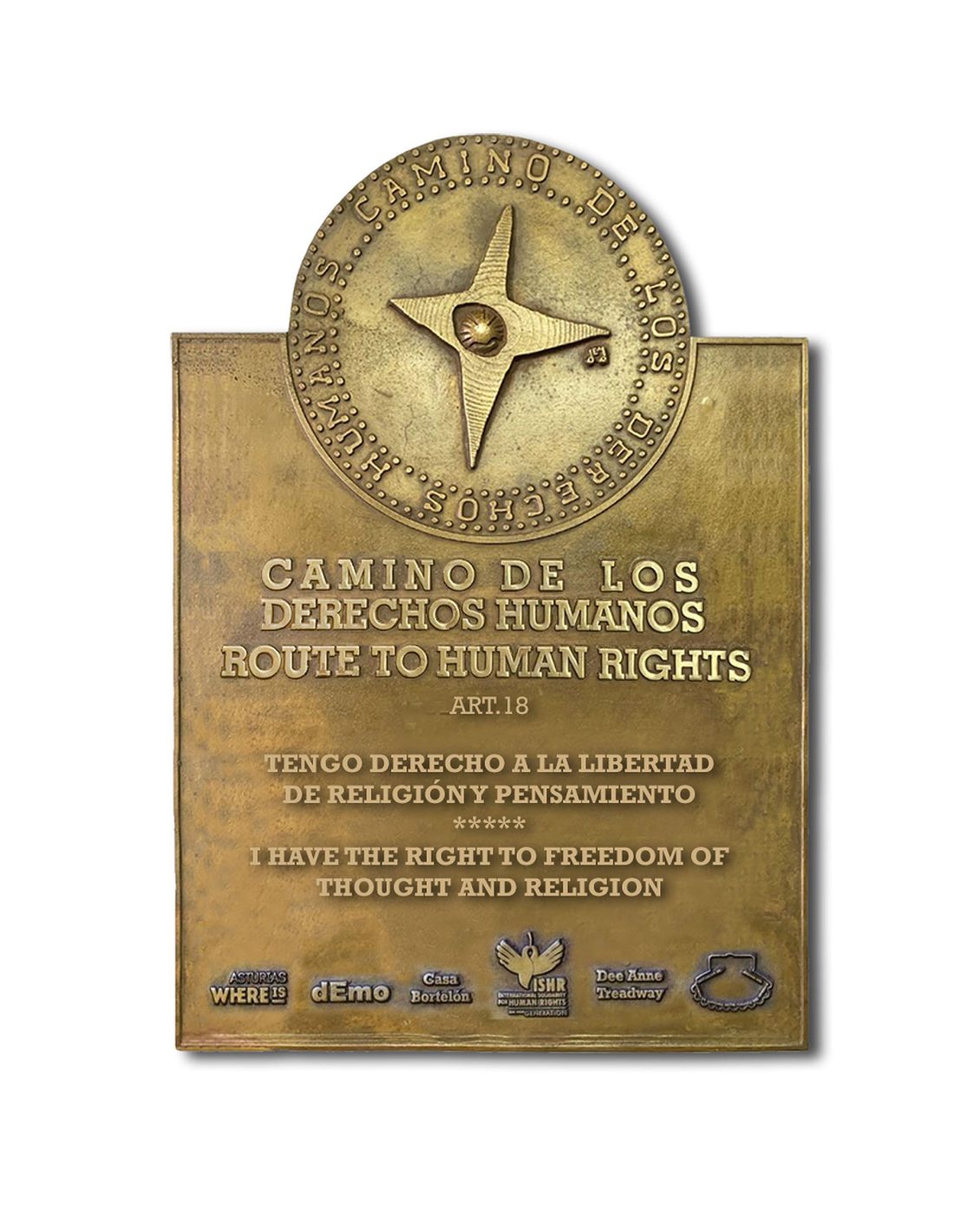
I have the right to freedom of thought and religion
Location: Casa Bortelón, a former pilgrims’ hospital, O Cádavo, A Fontaneira, 15, 27133 Baleira, Lugo, Galicia, Spain.
Sponsor: Dña. Dee Anne Treadway, Miami, FL, United States
Owner: Mr. Julio Fernández Pin.
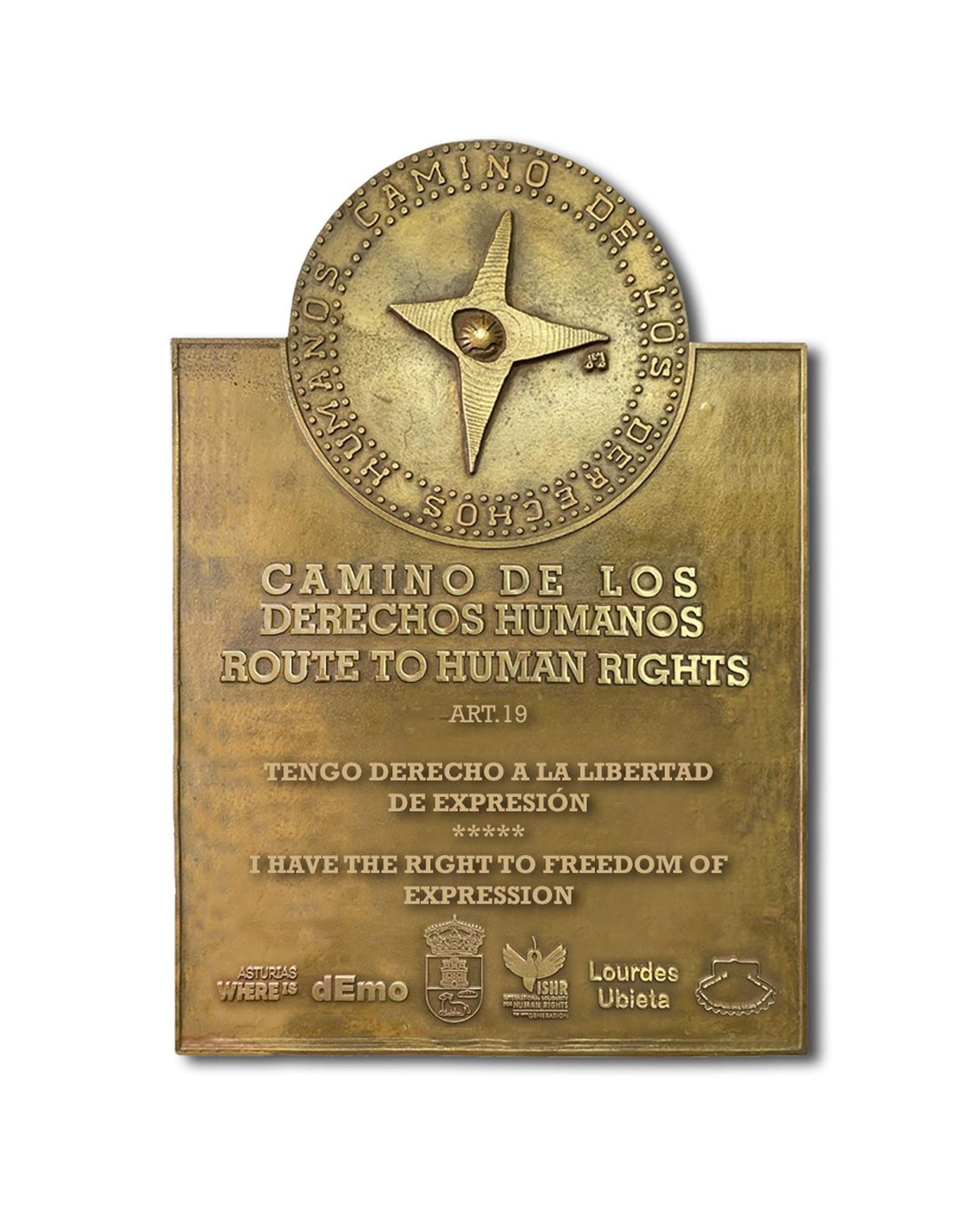
I have the right to freedom of expression
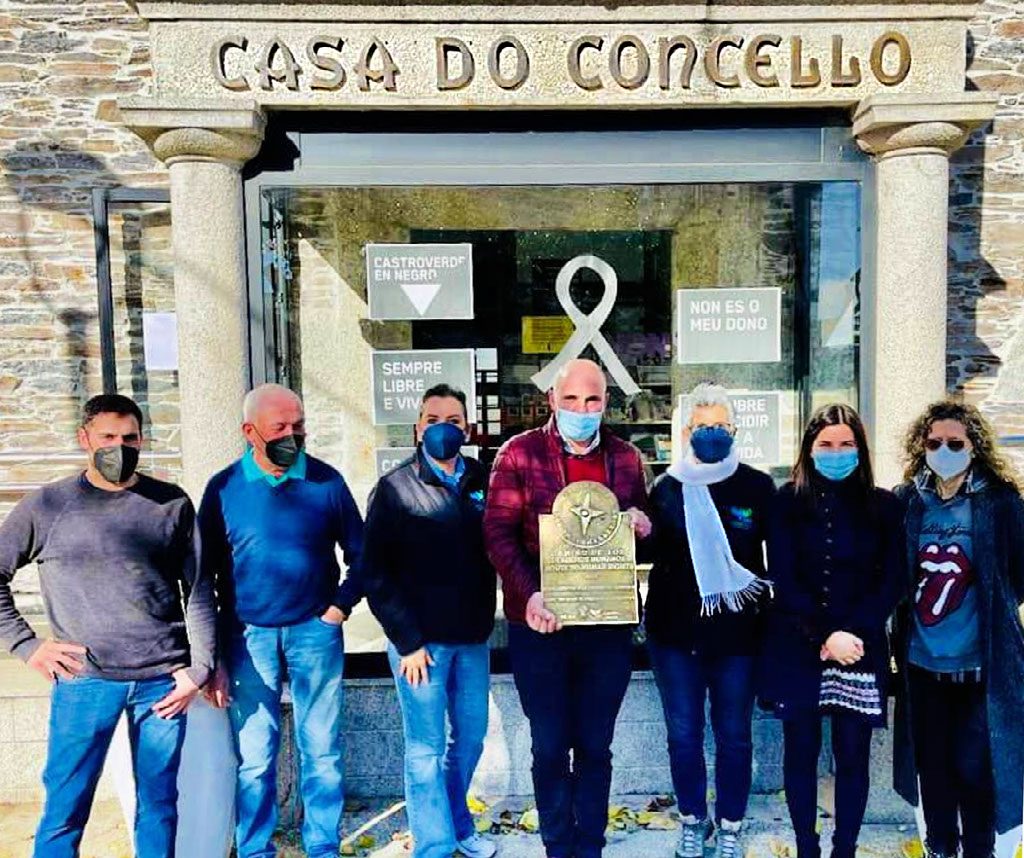
Location: Façade of the Concello de Castroverde, Praza do Concello, 2, 27120 Castroverde, Lugo, Spain.
Sponsor: Journalist Lourdes Ubieta, Miami, FL, United States
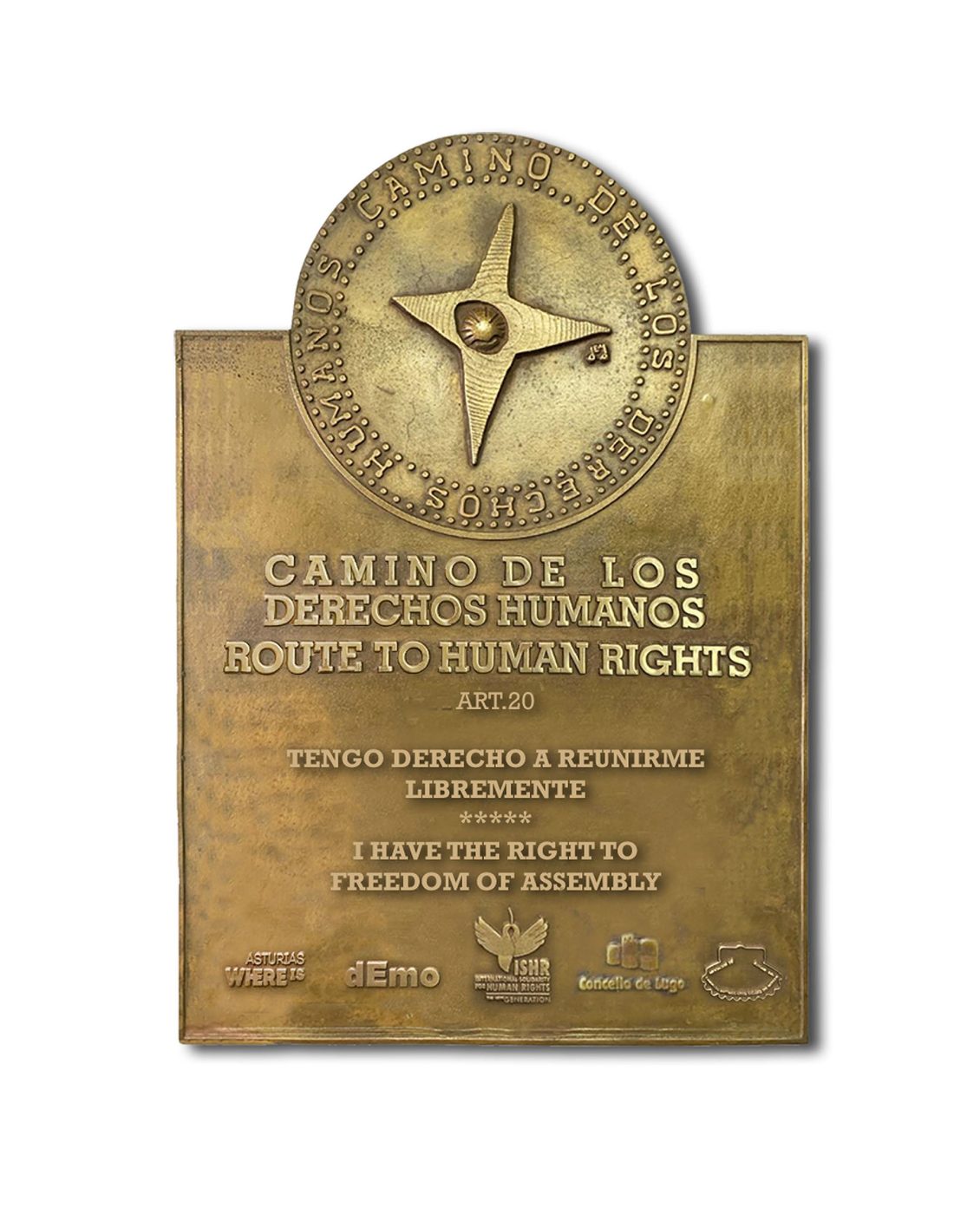
I have the right to freedom of assembly
Location: Monolith in the Praza da Ronda das Fontiñas, 27002 Lugo, Spain.
Sponsor: Concello de Lugo (Mayor’s Office), Galicia, Spain
Every pilgrim heading to Lugo and its walled city passes through this square.
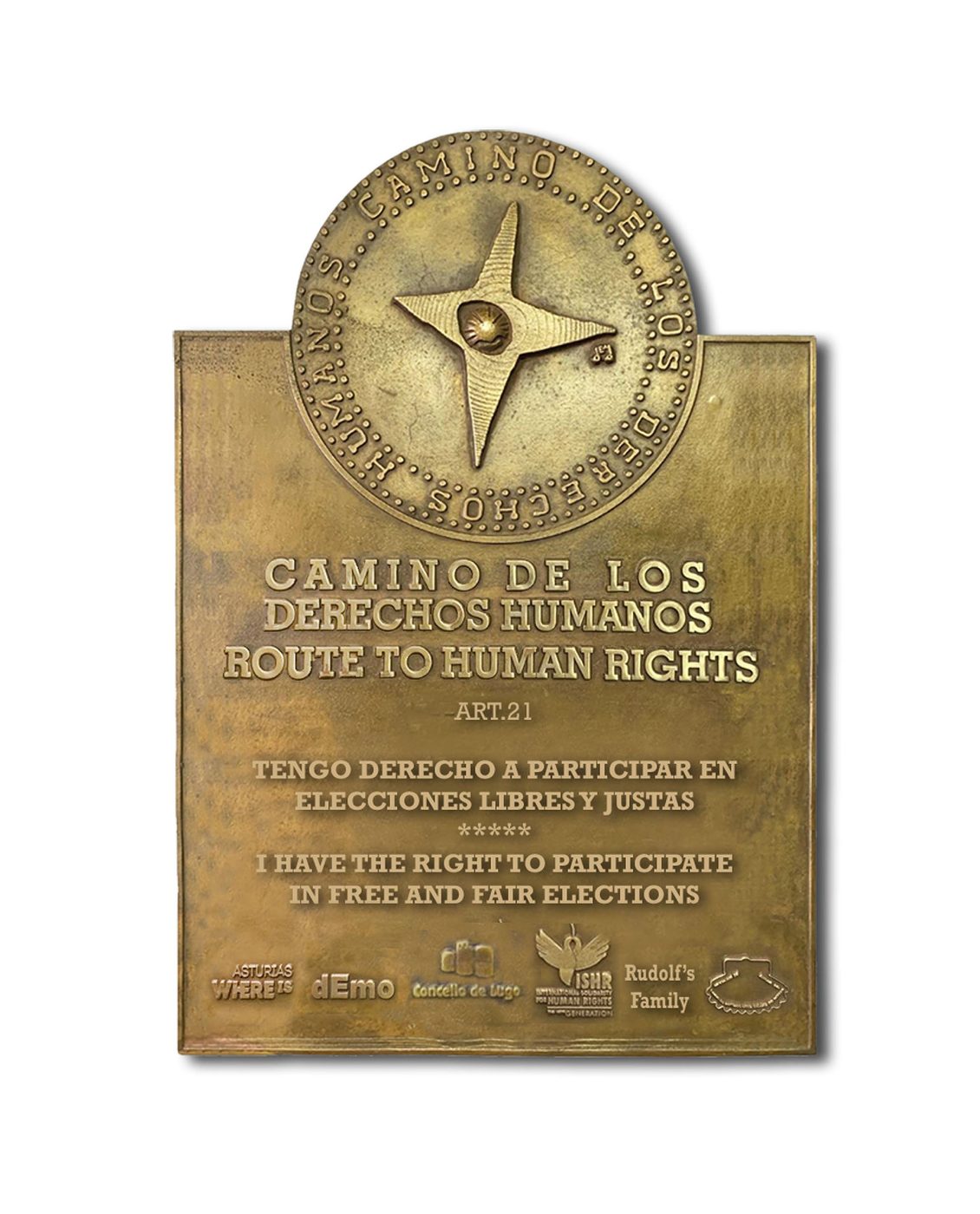
I have the right to participate in free and fair elections
Location: Porta Miñá Exhibition Hall, Rúa do Carme, s/n, 27004 Lugo, Galicia, Spain.
Sponsor: The Rudolf Family, Lugano, Switzerland
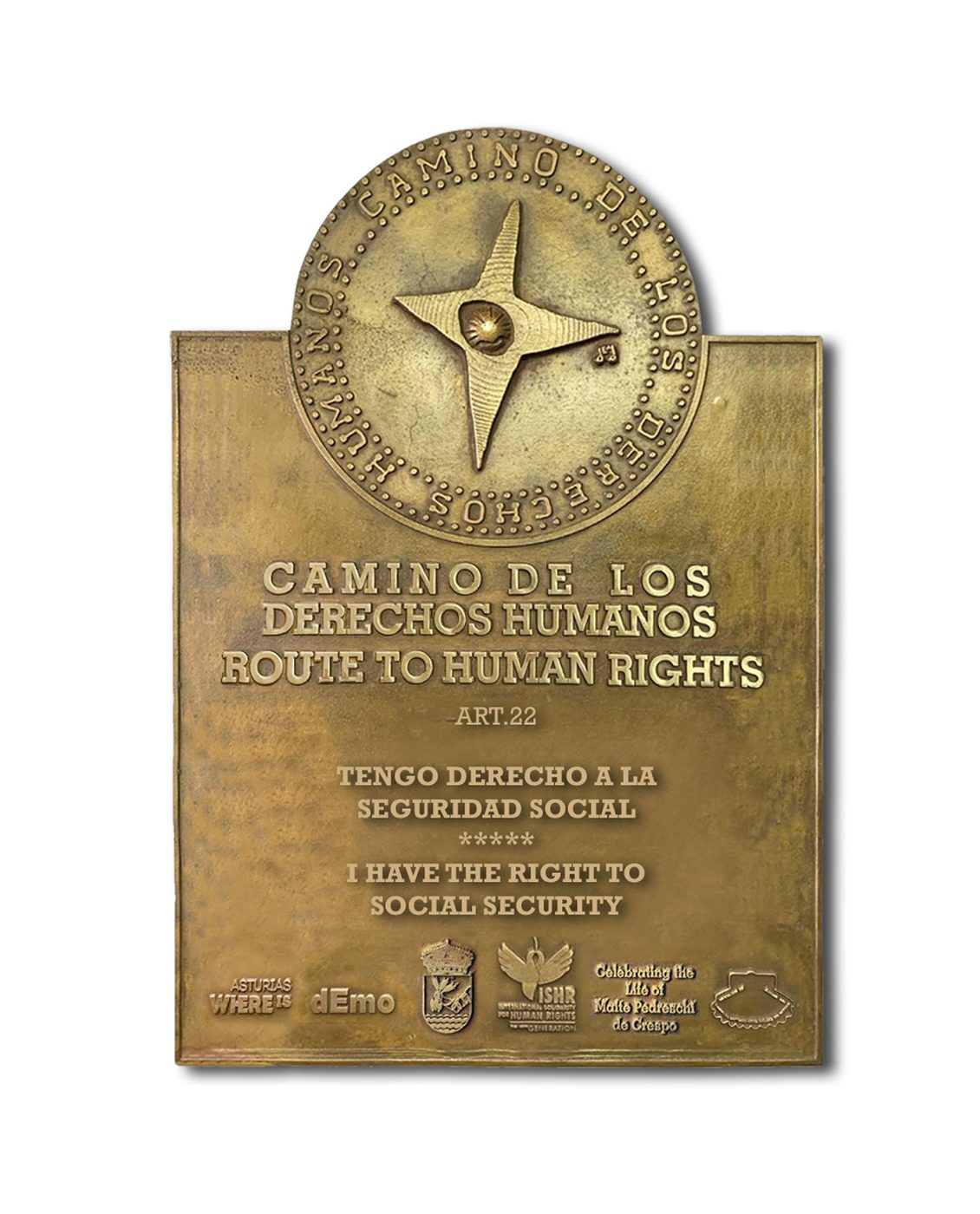
I have the right to social security
Location: San Román da Retorta, Concello de Guntín, Lugo, Galicia, Spain.
Sponsor: Professor Carola Pedreschi, Miami, FL, United States
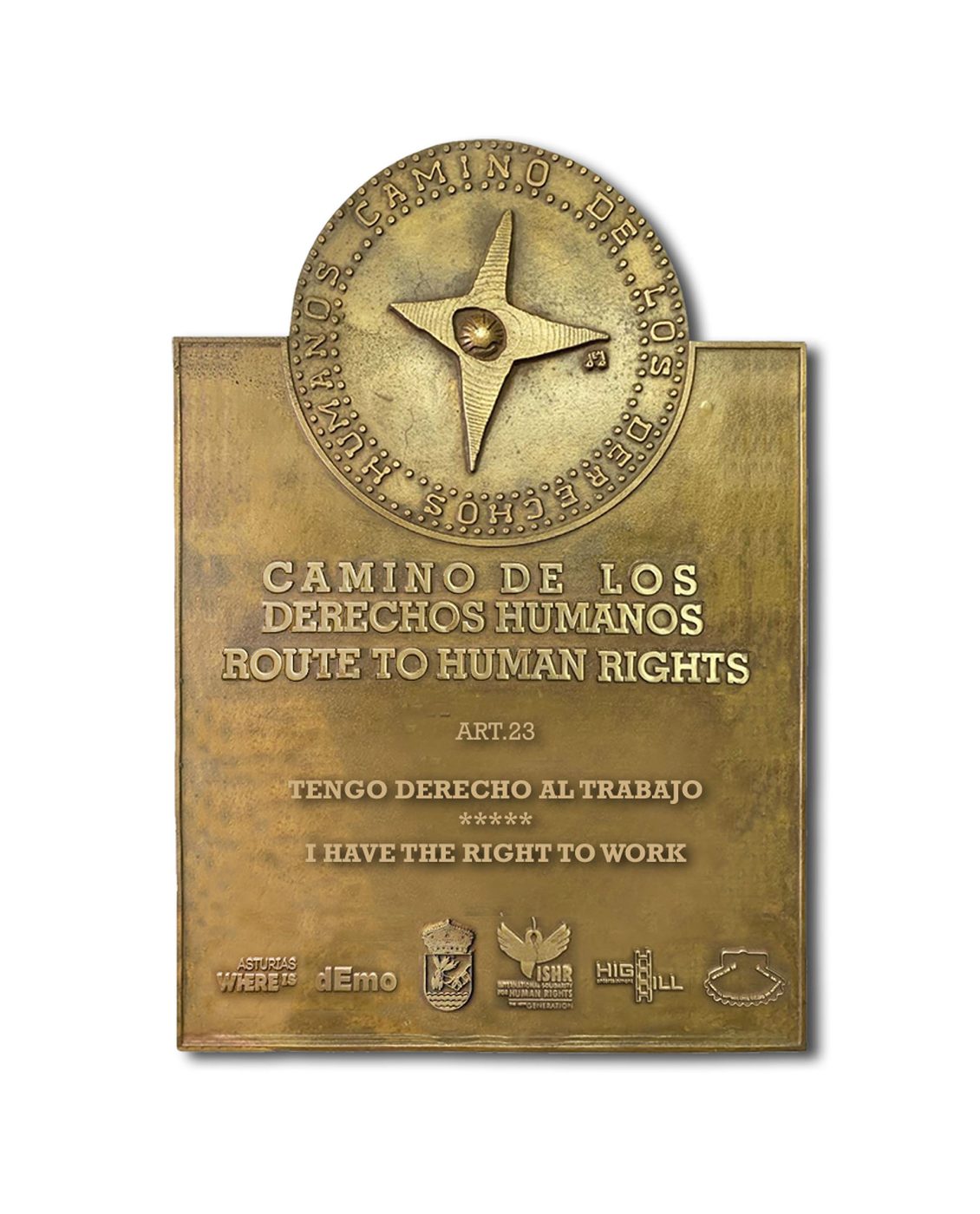
I have the right to work
Location: San Román da Retorta Hostel, Barrio de O Castrelo, San Román da Retorta, Concello de Guntín, Lugo, Galicia, Spain.
Sponsor: High Hill Entertainment, Miami, FL, United States
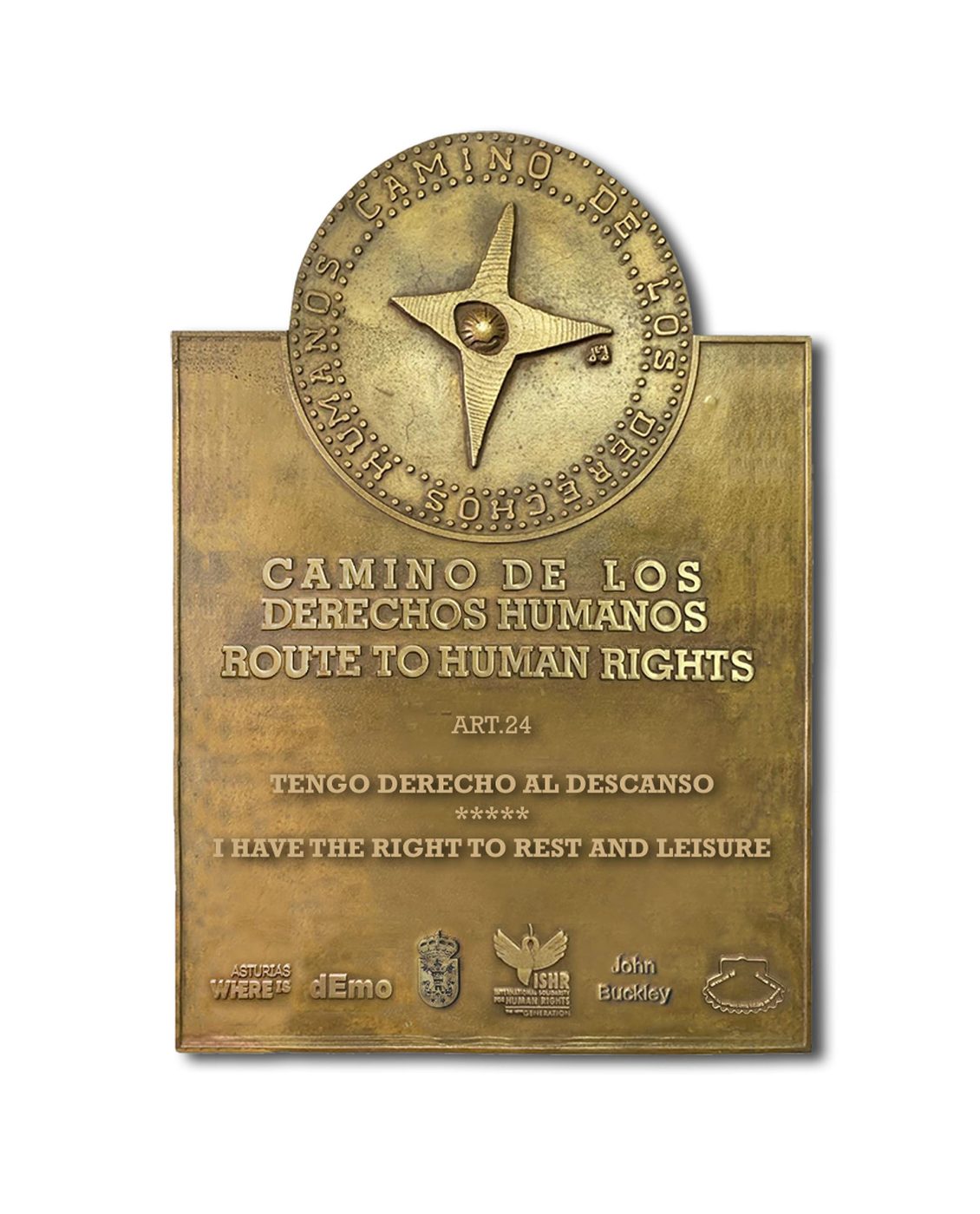
I have the right to rest
Location: Melide, Galicia, Spain.
Sponsor: John Buckley, Boston, Massachusetts, United States
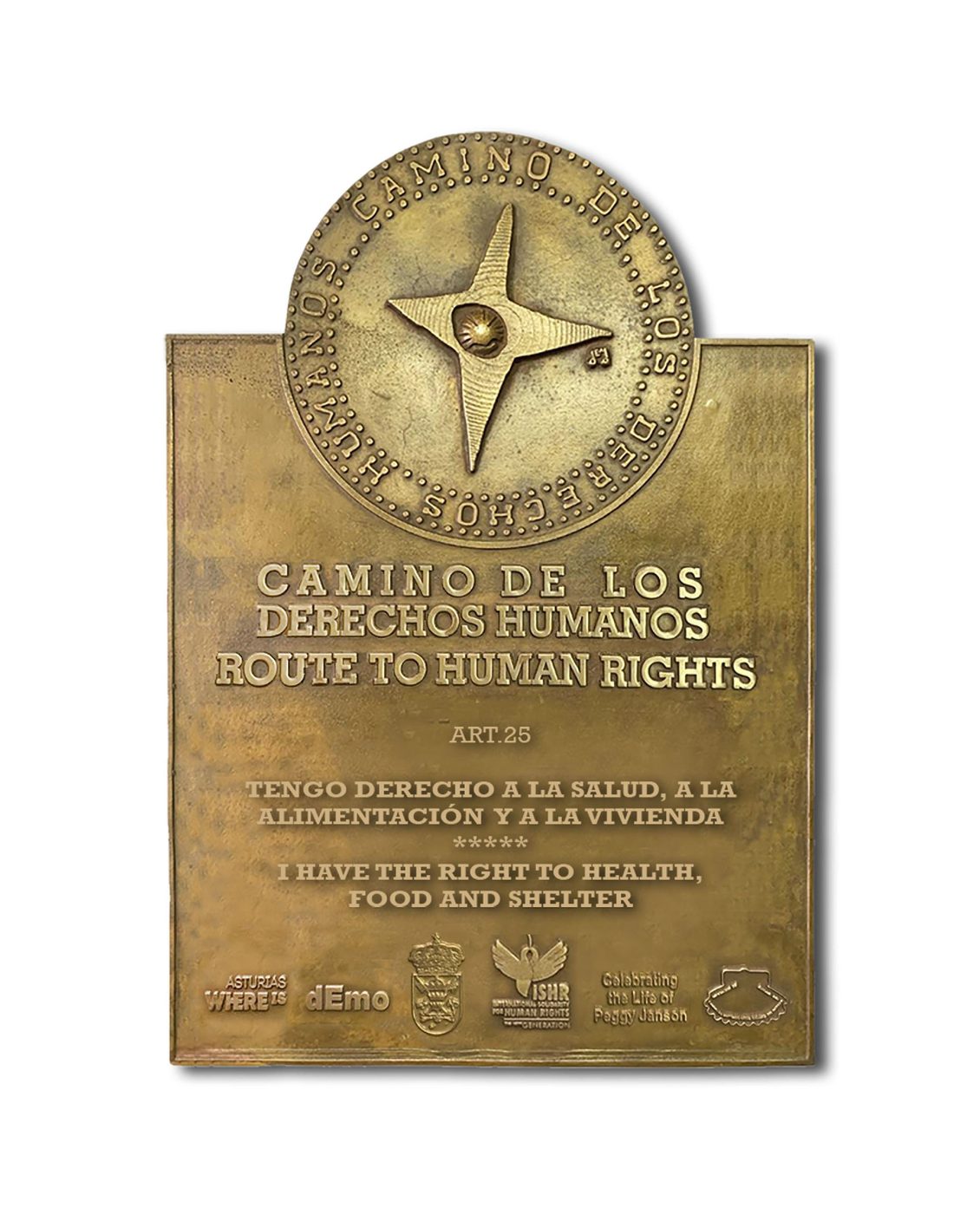
I have the right to health, food and shelter
Location: Melide, Galicia, Spain.
Sponsor: Professor Carola Pedreschi, Miami, FL, United States
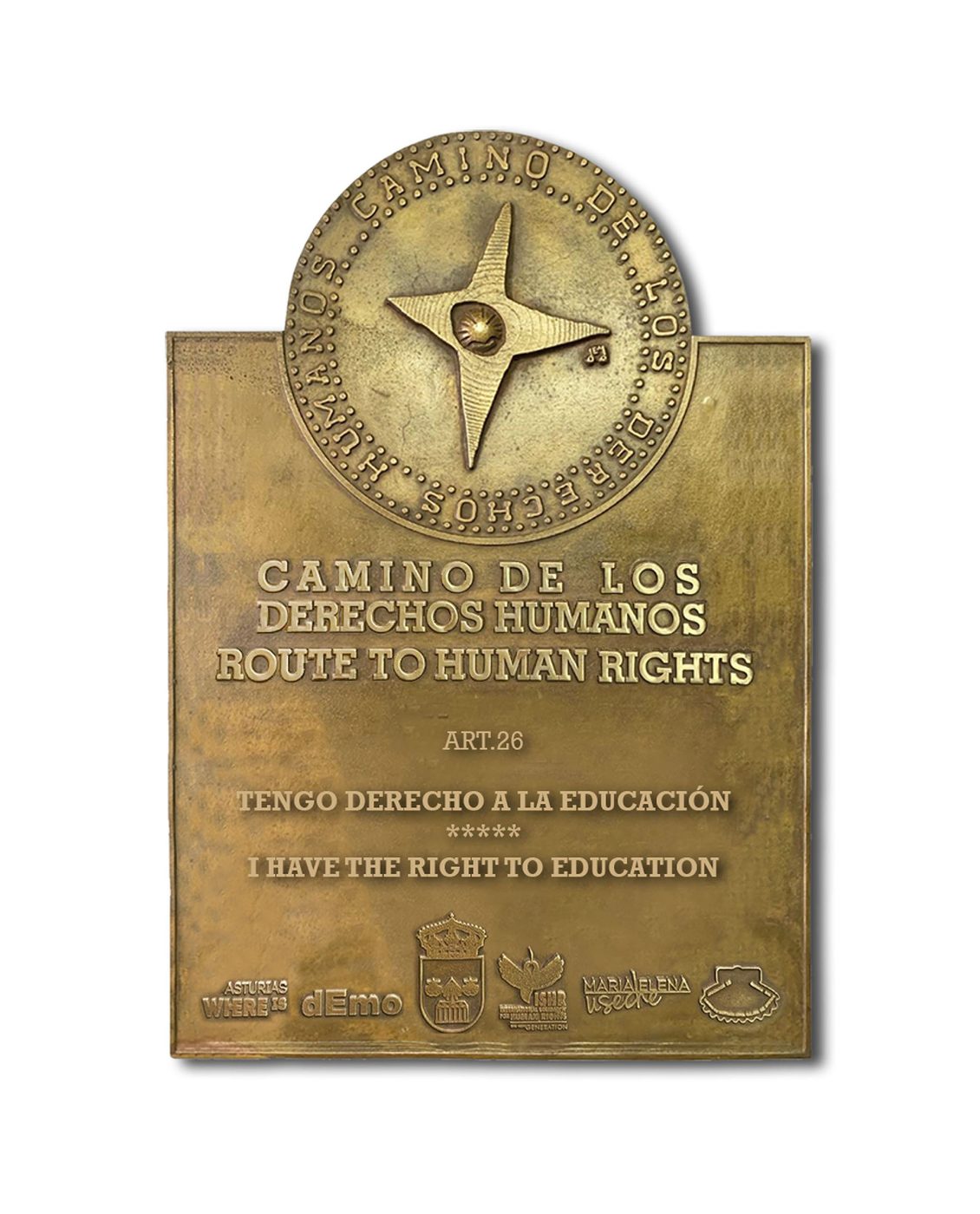
I have the right to education
Location: Rúa Cima do Lugar, Arzúa, Galicia, Spain.
Sponsor: Journalist María Elena Useche, Boston, Massachusetts, United States
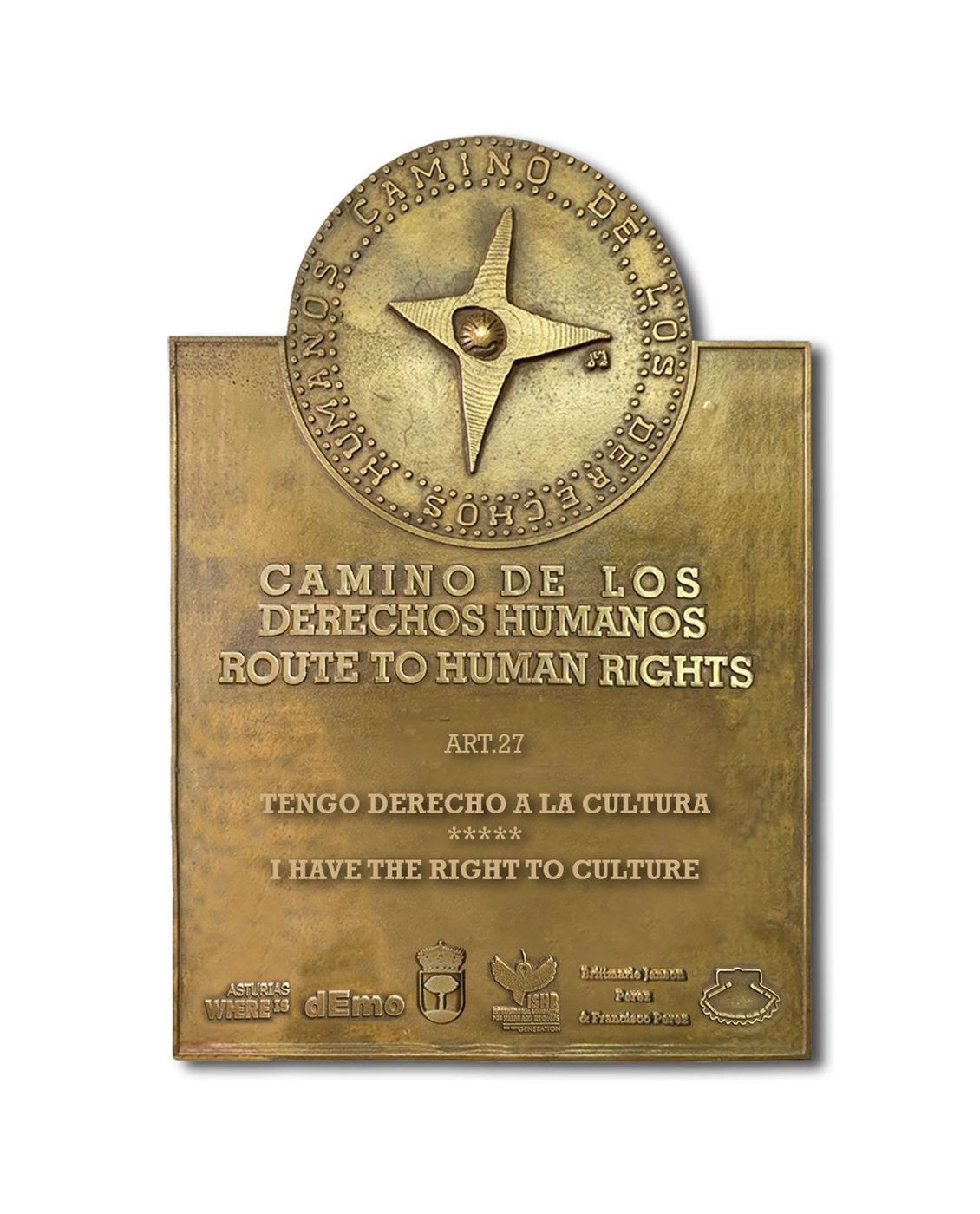
I have the right to culture
Location: Façade of the Town Hall of O Pino, Pedrouzo-Arca, s/n, 15821 A Coruña, Galicia, Spain.
Sponsor: Professor Carola Pedreschi, Miami, FL, United States
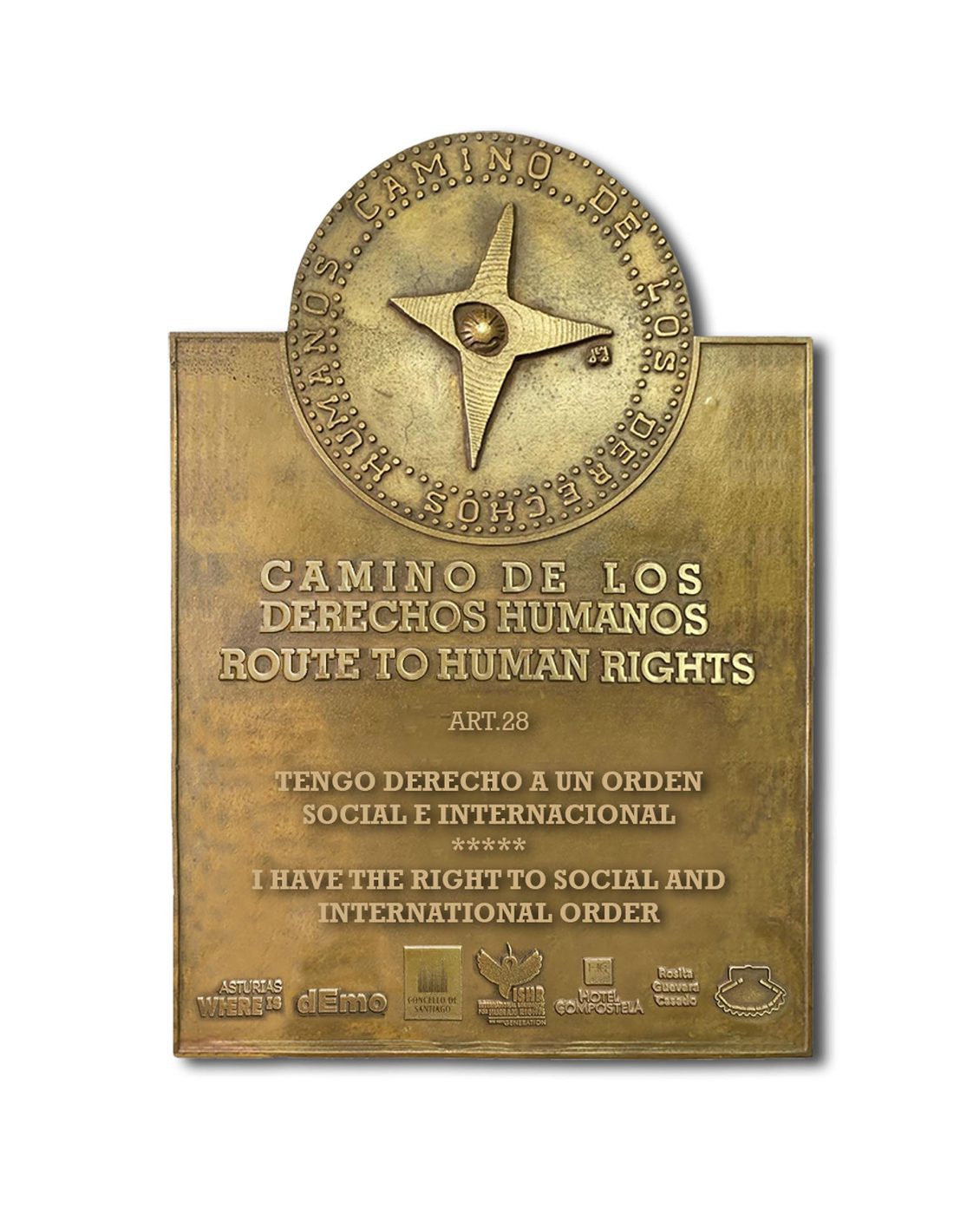
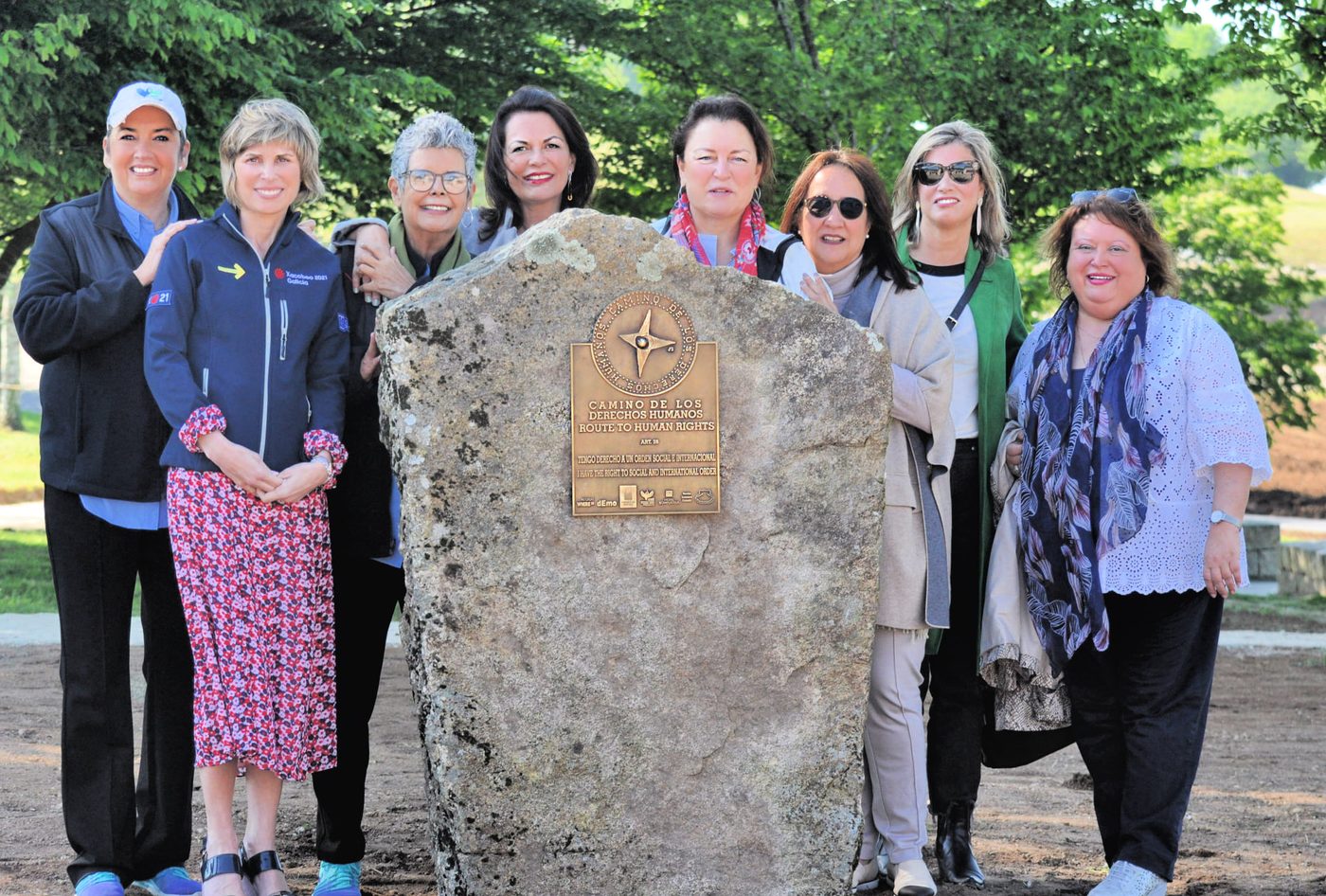
I have the right to a social and international order
Location: Monte do Gozo tourist complex, Santiago de Compostela, Galicia, Spain.
Sponsor: Hotel Compostela and the Suárez Guevara sisters, in memory of Rosita Guevara Casado (†), Miami, FL, United States
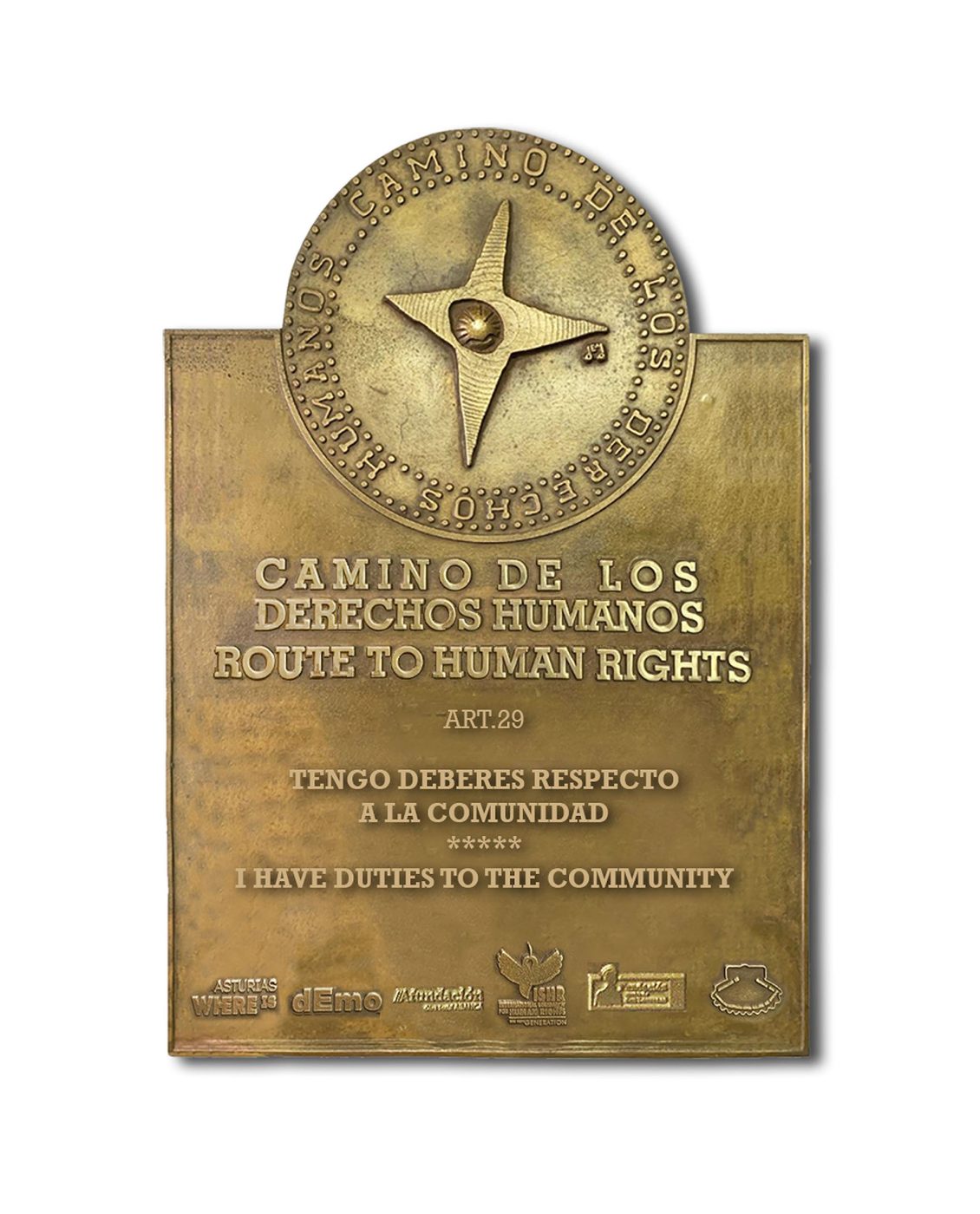
I have duties to the community
Location: Façade of the Historical Conservatory of Santiago (Conservatorio Histórico de Santiago), Pza. Salvador Parga 4-5, 15704 Santiago de Compostela, Galicia, Spain.
Sponsor: Castro de San Lourenzo, Cereixa, Lugo, Galicia, Spain
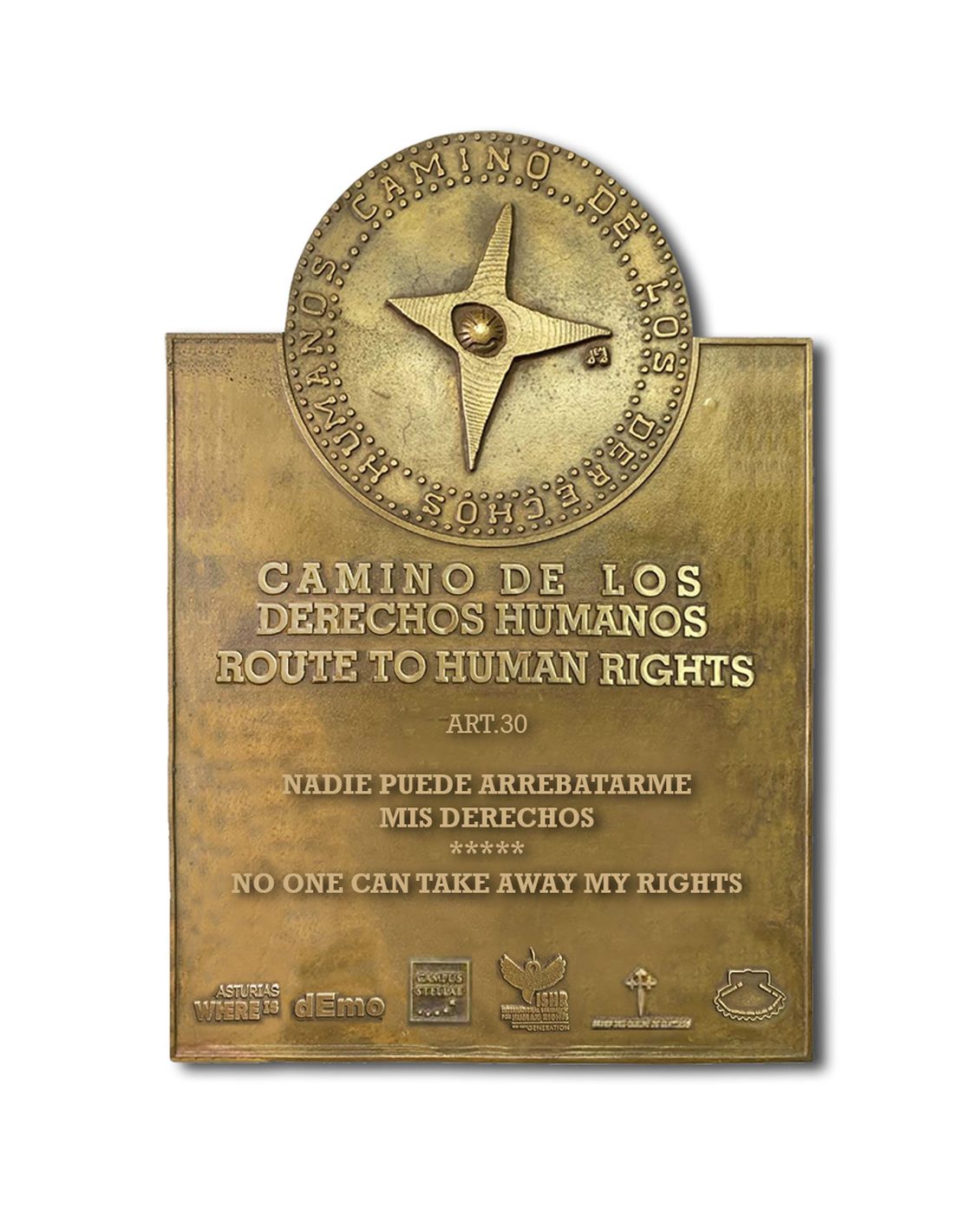
No one can take away my rights
Location: Façade of the European Institute Campus Stellae, Plaza da Quintana, 3, 15704 Santiago de Compostela, Galicia, Spain.
Sponsor: International Solidarity for Human Rights
Learn more about the host sites: European Institute Campus Stellae · Conservatorio Histórico de Santiago · Academia Xacobea · Concello de O Pino · Concello de A Fonsagrada · Grandas de Salime · Porta Miñá Exhibition Hall · Turismo de Galicia · Xacobeo · Valdés-Salas Foundation · Where is Asturias
Plaque Symbolism
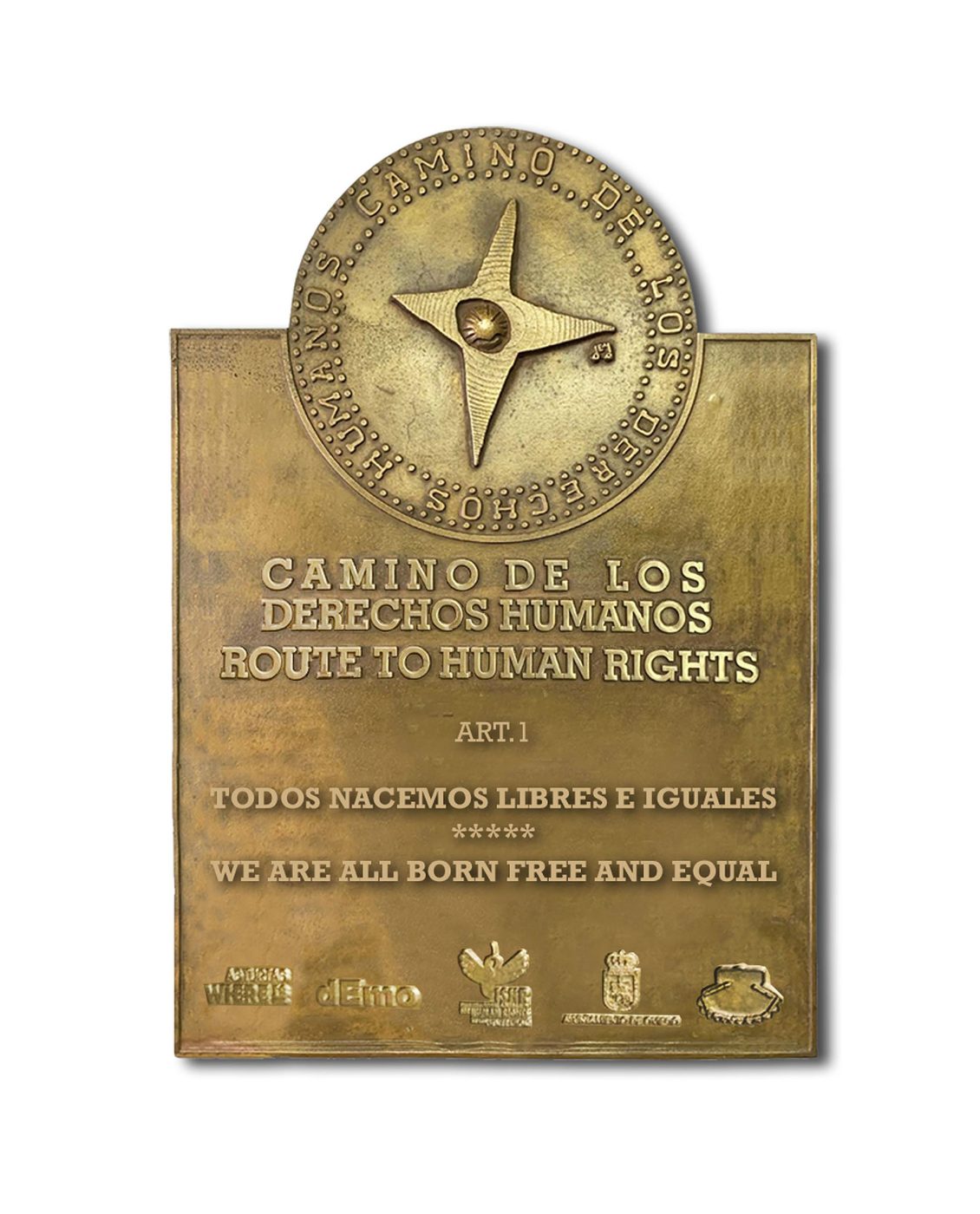
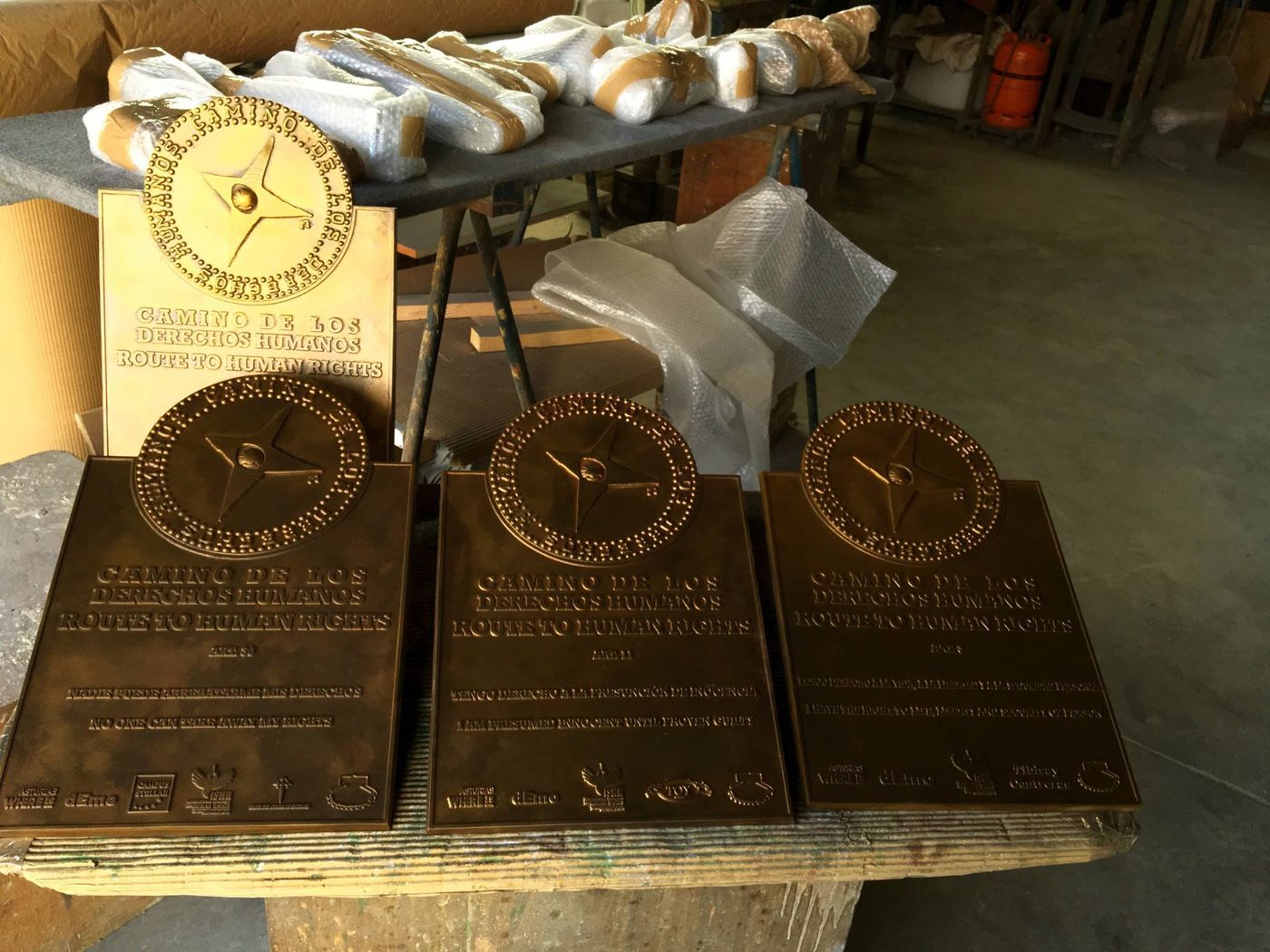
The plaques are cast in bronze, a symbol of divine justice and of the just demands placed on humankind. Bronze was the first important alloy produced by humans and gives its name to the Bronze Age.
Why the Way of Saint James?
Why was the Camino chosen for this human rights project?
The Way of Saint James has become the largest religious and cultural pilgrimage route in the world, traveled every year by thousands of people of all origins, religions and races. UNESCO declared it a World Heritage Site on December 10, 1993, the 45th anniversary of the proclamation of the Universal Declaration of Human Rights. It is a European Cultural Itinerary, known as “the Main Street of Europe,” and in 2004 the Prince of Asturias Foundation awarded it the Prince of Asturias Award for Concord as “a place of pilgrimage and encounter for people.” Over the centuries it has become a symbol of fraternity and the backbone of a European consciousness. The pilgrimage embodies many of the values of the Universal Declaration of Human Rights, including equality, liberty, freedom and fraternity.
Why the Primitive Way, of all the routes?
The Primitive Way is the original way: it is the origin of the Camino de Santiago. Likewise, the Universal Declaration is the original document in which the inalienable human rights of every person were established for the first time on a universal level, in 1948.
The Camino and Human Rights
A journey shaped by more than 1,200 years of history
The Route to Human Rights in the Primitive Way is “a fascinating journey gestated over 1,200 years of history,” in which millions of pilgrims have, through the centuries, promoted “values inherent to the rights and freedoms of individuals, which are associated with the Universal Declaration of Human Rights.”
The pilgrimage has long been seen as a journey of personal and spiritual growth in which people seek meaning and purpose in their lives. Along the way, pilgrims encounter diverse cultures, traditions and people, fostering empathy, understanding and respect for others. The Camino has also served as a platform for social justice, human dignity and equality: in the Middle Ages, hospitals and shelters were established along the route to assist and protect pilgrims, who were often vulnerable to disease, violence and poverty. In more recent times, it has also come to promote environmental sustainability, intercultural dialogue and peaceful coexistence.
The Camino, and the Primitive Way in particular, has received many accolades: it was the European Union’s first cultural itinerary, known as “the Street of Europe”; it received the Prince of Asturias Award for Concord; and in 2015 UNESCO added the Primitive Way to the World Heritage listing of the Camino de Santiago. The Route to Human Rights in the Primitive Way builds on this legacy of values and principles essential to human flourishing and dignity, and aims to make everyone who travels the Camino aware of the importance of human rights and their promotion.
The Route Is Alive
Certificates, workshops and schools
After four years of development, and a global event that delayed its inauguration by two years, the first stage of the project has been completed: the Route to Human Rights in the Primitive Way is alive.
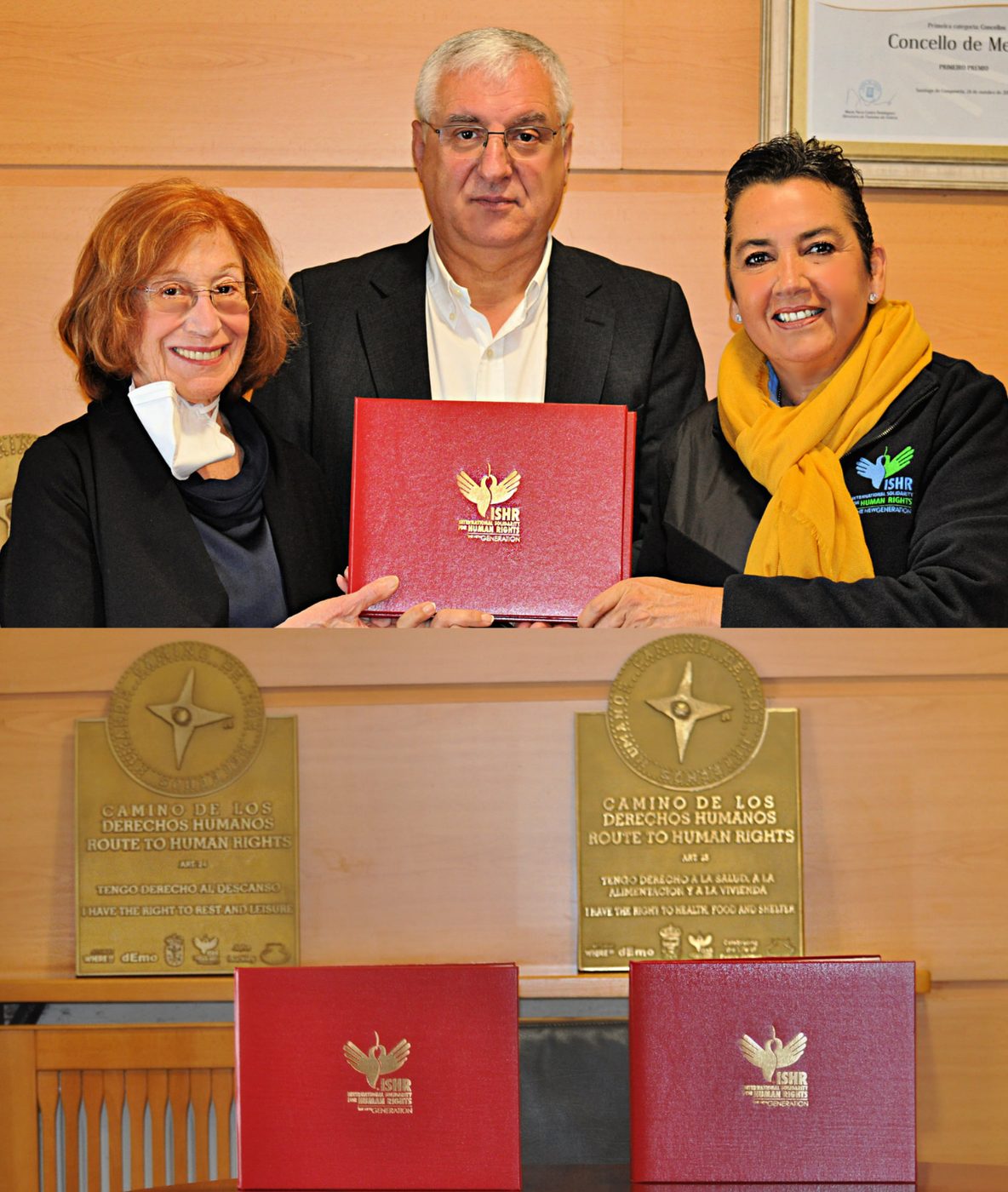
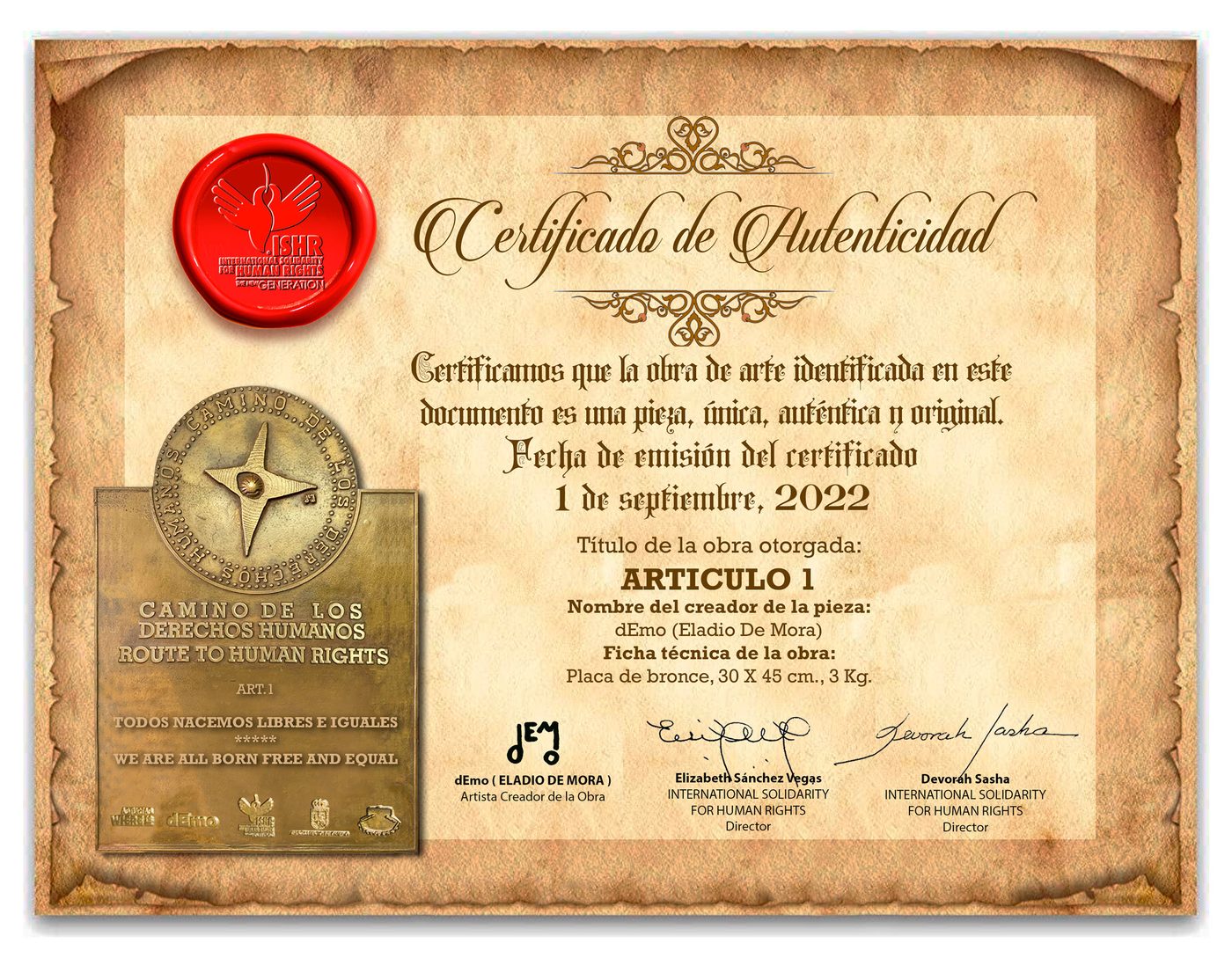
Certificates of authenticity were issued and signed by the artist, Eladio de Mora (dEmo), and by the ISHRIGHTS directors Elizabeth Sánchez Vegas and Devorah Sasha. The 30 certificates have been handed over to the custodians of each work of art along the Primitive Way.
Since 2016, alongside the development of the route, the ISHRIGHTS Foundation has given human rights workshops in schools along the route in Asturias and Galicia. As part of these programs, elementary school students on the Primitive Way created human rights-inspired stories, which ISHRIGHTS has edited and printed.
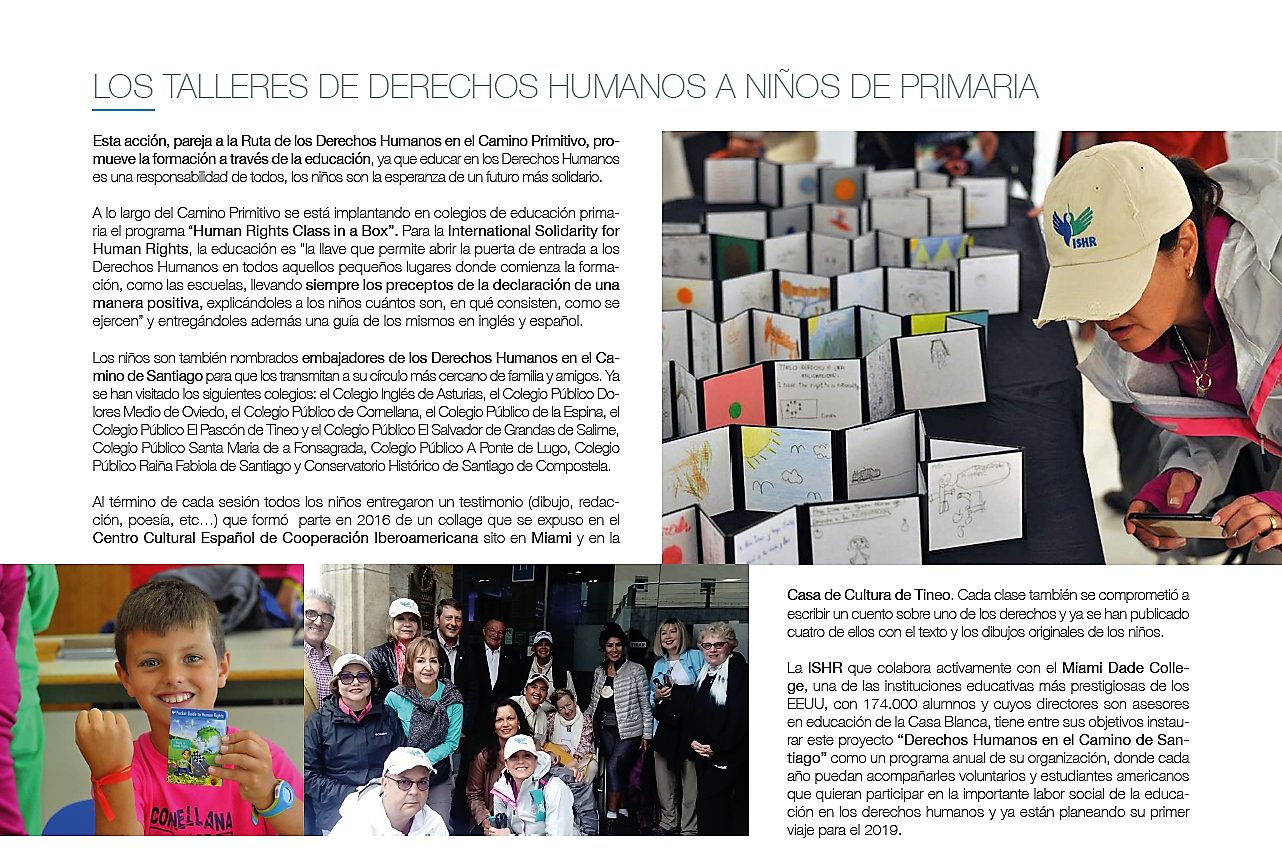
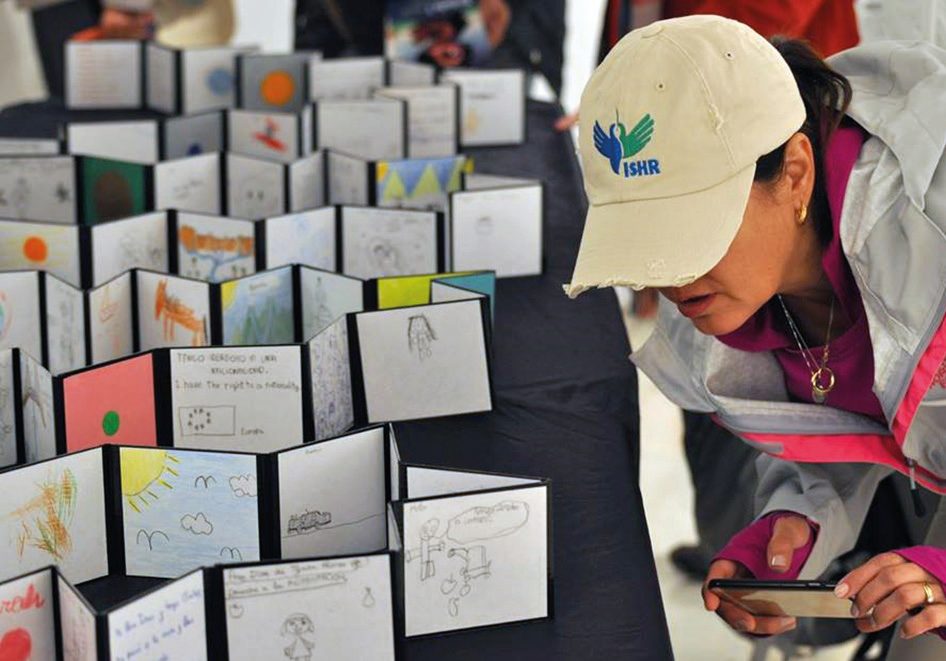

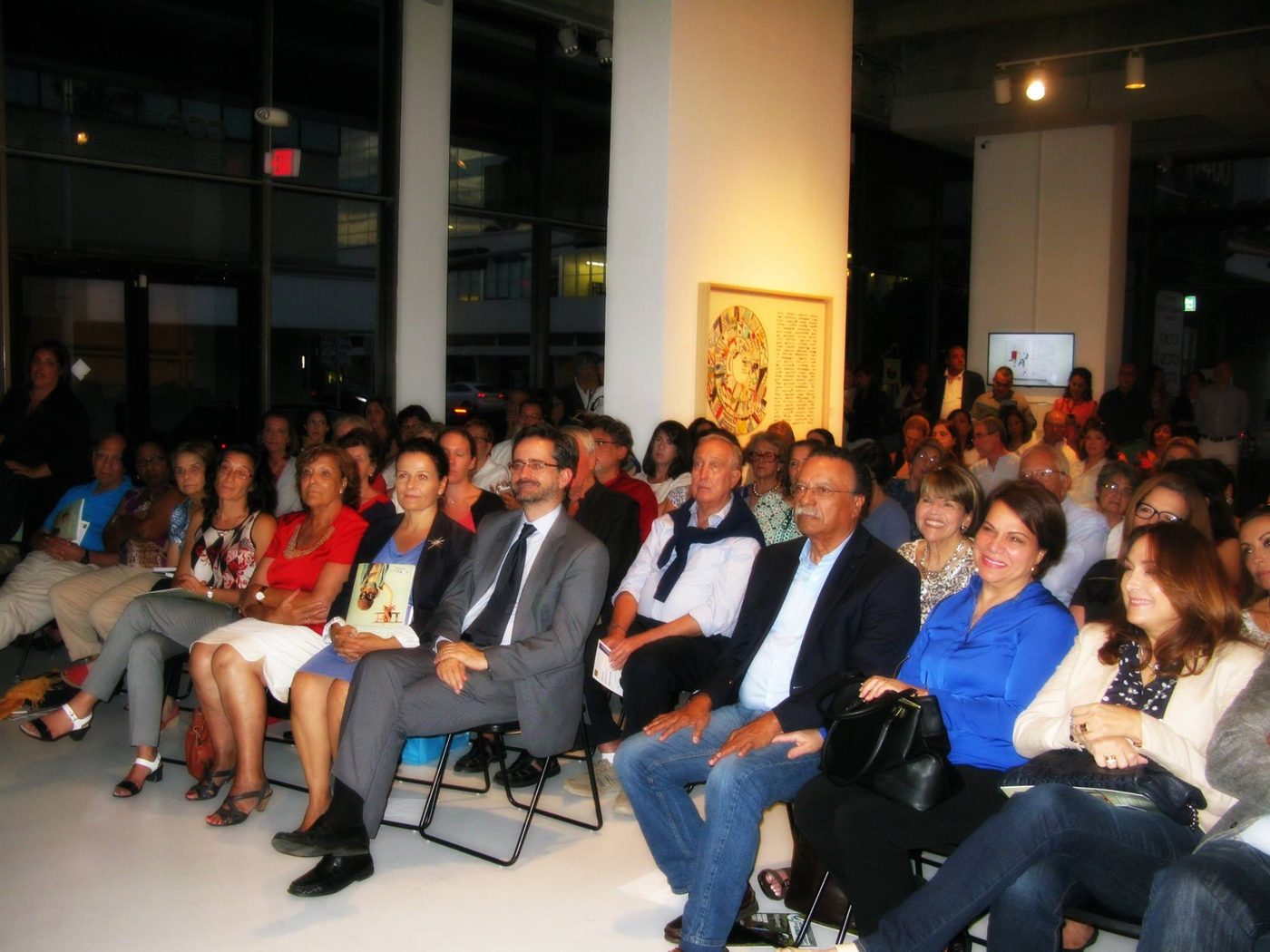
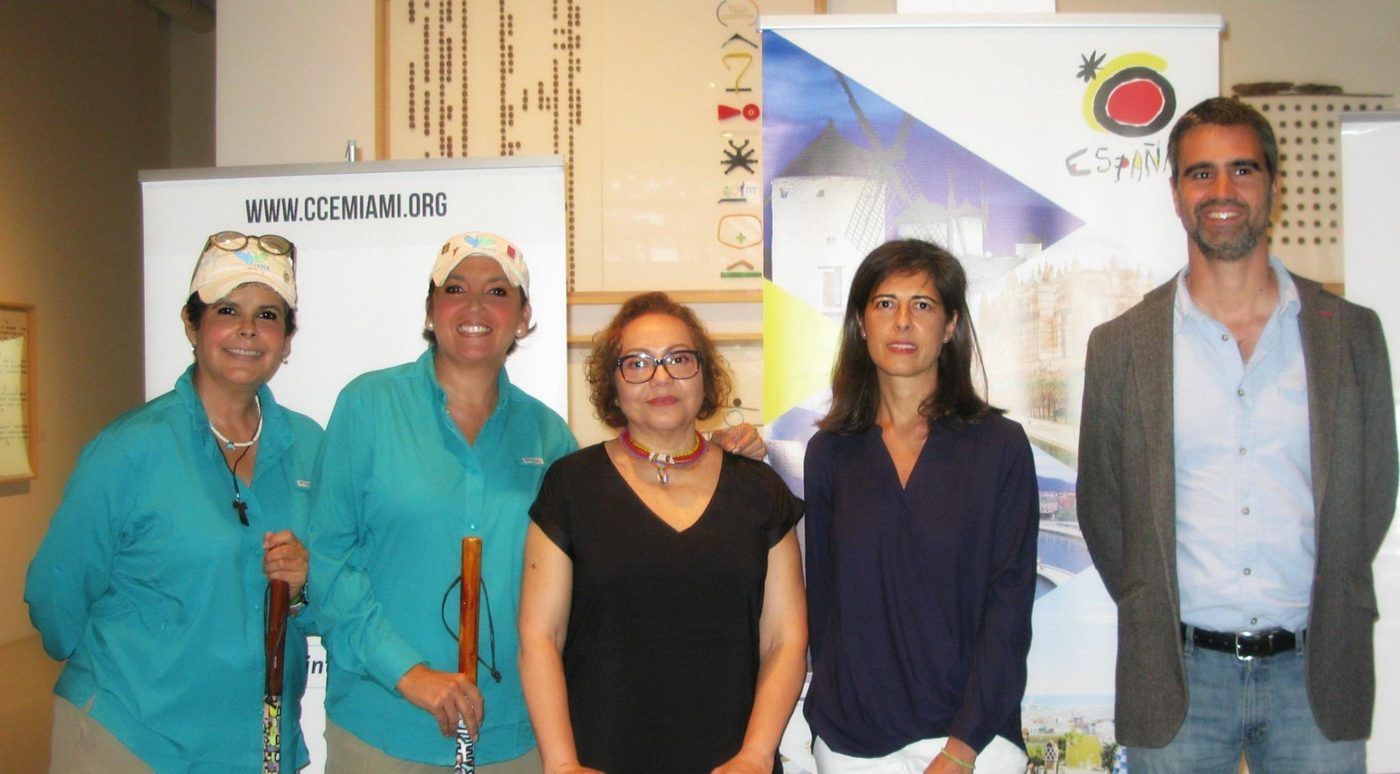
Event at the Spanish Cultural Center in Miami
“Route to Human Rights in the Primitive Way”
Map of the Plaques
Click on the map to see where each plaque is located
Plan your walk with the Route to Human Rights guide on Pilgrimaps.
Acknowledgments
The Route to Human Rights has been possible thanks to the invaluable collaboration of:
ISHR Directors
Elizabeth Sánchez Vegas (President) · Ana María Leonardi (Vice President) · Devorah Sasha (Executive Director) · Marisol Barboza (Treasurer)
ISHR Advisory Board
Dr. Carlos E. Sardi · Dee Anne Treadway · Ileana Suárez · José Antonio Cisneros, MD · Karem Alsina · María Elena Useche · Marisol Barboza · Olga Ortiz Mera · Raiza Perrault · Tibi Ellis · Wilma Bulkin Siegel, MD
Regions of Spain
Principality of Asturias · Autonomous Community of Galicia
Mayors
Wenceslao López Martínez · José Luís Trabanco González · Sergio Hidalgo · José Ramón Feito Lorences · José Antonio Mesa Pieiga · Eustaquio Revilla Villegas · Carlos López López · Xosé María Arias · Lara Méndez López · María José Gómez Rodríguez · José Manuel Pérez Penas · José Luis García López · Manuel Taboada Vigo · Xosé Antonio Sánchez Bugallo
Councils / Concellos
Ayuntamiento de Oviedo · Ayuntamiento de Grado · Ayuntamiento de Salas · Ayuntamiento de Tineo · Ayuntamiento de Pola de Allande · Ayuntamiento de Grandas de Salime · Concello de A Fonsagrada · Concello de Castroverde · Concello de Lugo · Concello de Guntín · Concello de Melide · Concello de Arzúa · Concello de O Pino · Concello de Santiago de Compostela
Plaque Sponsors
International Solidarity for Human Rights · Castro de San Lourenzo · Hotel Compostela · Ileana Suarez Guevara · Carola Pedreschi · María Elena Useche · John Buckley · High Hill Entertainment · Rudolf Family · Alcaldía/Concello de Lugo · Lourdes Ubieta · Dee Anne Treadway · Wilma Bulkin Siegel · Ayuntamiento/Concello da Fonsagrada · Miami Dade College – Eduardo J. Padrón Campus Student Government Association (SGA) · Valeria Mariscal · Gallo Herbert Architects · TOY Foundation · Herbert Family · Alejandro Rebolledo · Adrian Dominican Sisters · D. Benjamín Alba Menéndez · Walter & Lalita Janke Foundation · Olga Ortiz Mera (United Aliens Artist Foundation) · Dña. Tibisay Ellis · Amigos de Venezuela · Eladio de Mora (dEmo)
With thanks to (in alphabetical order)
Academia Xacobea · Adrian Dominican Sisters · Afundación · Agencia EFE · Albergue A Pociña de Muñiz · Albergue Casa de Pasarín · Albergue de Peregrinos de El Salvador · Albergue de Peregrinos del Monasterio de San Salvador de Cornellana · Albergue Juvenil de Castro (Grandas de Salime) · Albergue Porta de Grandas · Albergue-Pensión Cantábrico · Alecia Gisela Lokpez · Alejandro Rebolledo · Alvaro Solano Ferenandez Sordo · Ana Ferreirós Miguéns · Ana Maria Leonardi · Ana Perez Feito · Ana Salgado Boquete · Angeles Souto Louzao · Asociación de Empresarios del Camino Primitivo · Balbino Lougedo · Bar Casa Bortelón · Beatriz Briceño · Begoña Panea · Benjamin Alba Menendez · Bernardo Xabier Niño Neira · Bill Dwin · Bloque de Armas · Bolaño (José Lombardía Pereira) · Brian Herbert · Camino Assist · Carmen Basadre Vázquez · Carola Pedreschi · Casona Vidal · Cecilia Pereira Marimón · Celestino Díaz Morán · Centro Cultural Español · Colegio A Ponte de Lugo · Colegio Dolores Medio · Colegio El Pascón · Colegio El Salvador Grandas de Salime · Colegio Ingles de Asturias · Colegio Mestre Rodriguez Xixirei · Colegio Público de Cornellana · Colegio Público Eugenia Astur-La Espina · Colegio Raíña Fabiola (Santiago de Compostela) · Colegio Santa María de Fonsagrada · Conservatorio Histórico de Santiago · Corporación Radio e Televisión de Galicia (CRTVG) · Cristina Marie Drumm Leonardi · Daniela Herbert · David Azpiazu · David Lawrence Jr. · Dee Anne Treadway · Diana Castro · Diana Lamelas Prieto · Dolores Fernandez Fernandez · Edu González Martínez · Emilio C. Sanchez · Esther Sobral · Familia Rudolf · Fundación Castro de San Lourenzo · Fundación TOY · Fundación Valdes-Salas · Gallo Herbert Architects · Giannina Coppiano Dwin · Gisela Tirado Yepes · Glenys Rojas Lopez · High Hill Entertainment · Hotel Castillo Valdes-Salas · Hotel Compostela · Hotel Las Grandas · Hotel Mendez Núñez · Hotel Restaurant La Nueva Allandesa · Hotel y Restaurante Palacio de Meras · Iglesia de Santa María Magdalena (Grandas de Salime) · Iglesia Ermita de San Pascual Baylon (Tineo) · Ileana Suarez Guevara · Instituto Europeo Campus Stellae · Isabel Ferreiro Martínez · James Drumm · Jesús Palmou Lorenzo · Jesus Picatto Fernandez · Joaquín Lorences · John Buckley · Jose Antonio Cisneros · Juan Jose Diaz · Juan Pensado Barbeira · Julio Fernandez Pin · Karina Martinengo Pino · Laureano García Diez · Lilly Blanco · Loly Rodriguez Martinez · Lourdes Ubieta · Luis Ernesto Prieto · Manuel Lopez Garcia · Margot Vicentini Benedetti · Maria Belen Banos Riadigos · Maria del Pilar Ferreiro Villar · Maria Elena Rudolf · Maria Elena Useche · Maria Jesus Rodriguez · Maria Jose Gontad · María Teresa Cores Fernández · Maria Teresa Gonzalez · Mariana Frontado · Marta Rodriguez (†) · Mercedes Roson Ferreiro · Miami Dade College · Miguel “Mike” B. Fernandez · Miranda Castro · Montserrat Vidal · Nava Castro · Nicolas Herbert · Norma Sigala (†) · Nuria Pereira Martínez · Oficina de Turismo de España (Miami) · Olga Ortiz Mera · Ovidio Aria · Pablo Chirouze · Pablo Manavello · Paloma Fernandez Sanchez · Patricia Paoli · Picatto Desguaces Camiones · Raiza Perrault · Restaurante Cantabrico · Roberto Sánchez Ramos · Rosie Perez · Sala de exposiciones Porta Miñá · Sandra Castro · Soraya Zaoudi Márquez · Taxicamino · Televisión de Galicia (TVG) · Thania Segura · Tibisay Ellis · Toñín en la Nueva Allandesa · Travel Llanes · Ulises Bértolo · United Aliens Artist Foundation (UAAF) · Valerie Alvarez Jeanpetit · Valerie Mariscal · Vanessa Janke · Walter & Lalita Janke Foundation · Where Is Asturias · Wilma Bulkin Siegel · Xunta de Galicia · Xurxo Ayán
Press & Learn More
Press archive and useful links
- Inauguration of the Route to Human Rights in the Primitive Way, Príncipe Felipe Auditorium, OviedoISHR
- The Camino de Santiago becomes a space for claiming human rightsISHR
- The Way of Saint James and Human Rights (Mundiario, English)ISHR
- Camino de Santiago y derechos humanosMundiario · Sept 18, 2022
- El Camino, cuna de derechos humanos durante la historiaEl Correo Gallego · Sept 15, 2022
- El Camino de Santiago, espacio de reivindicación de los derechos humanosLa Voz de Galicia · Sept 15, 2022
- Javier Arias welcomes the pilgrims of the Route to Human RightsXunta de Galicia
- Europe’s first Route to Human Rights inaugurated on the Primitive WayEl Correo Gallego · Sept 2022
- Music for the Route to Human Rights on the CaminoLa Nueva España · Sept 2, 2022
- Europe’s Route to Human Rights is inauguratedEl Correo Gallego · Aug 31, 2022
- O Pino joins the Route to Human Rights promoted by ISHRConcello de O Pino
- A plaque at Monte do Gozo to raise awareness of human rightsLa Voz de Galicia · May 5, 2022
- The Xunta places a plaque at Monte do GozoEuropa Press Galicia · May 2022
- A plaque at Monte do Gozo champions human rightsQuincemil (El Español) · May 2022
- Monte do Gozo hosts the first of thirty bronze plaquesEl Correo Gallego · May 2022
- Magazine featureRevista Kena México
- Route to Human Rights – pilgrimage guidePilgrimaps
- Map of the 30 plaquesGoogle My Maps
- Route to Human Rights articlesWhere is Asturias
Press coverage of the May 2022 trip to the Primitive Way also appeared in ISHRIGHTS’ own magazine, Es Madrid no Madriz and Variedades (Venezuela).
Walk the Route to Human Rights
30 articles · 30 plaques · 30 points along the Primitive Way
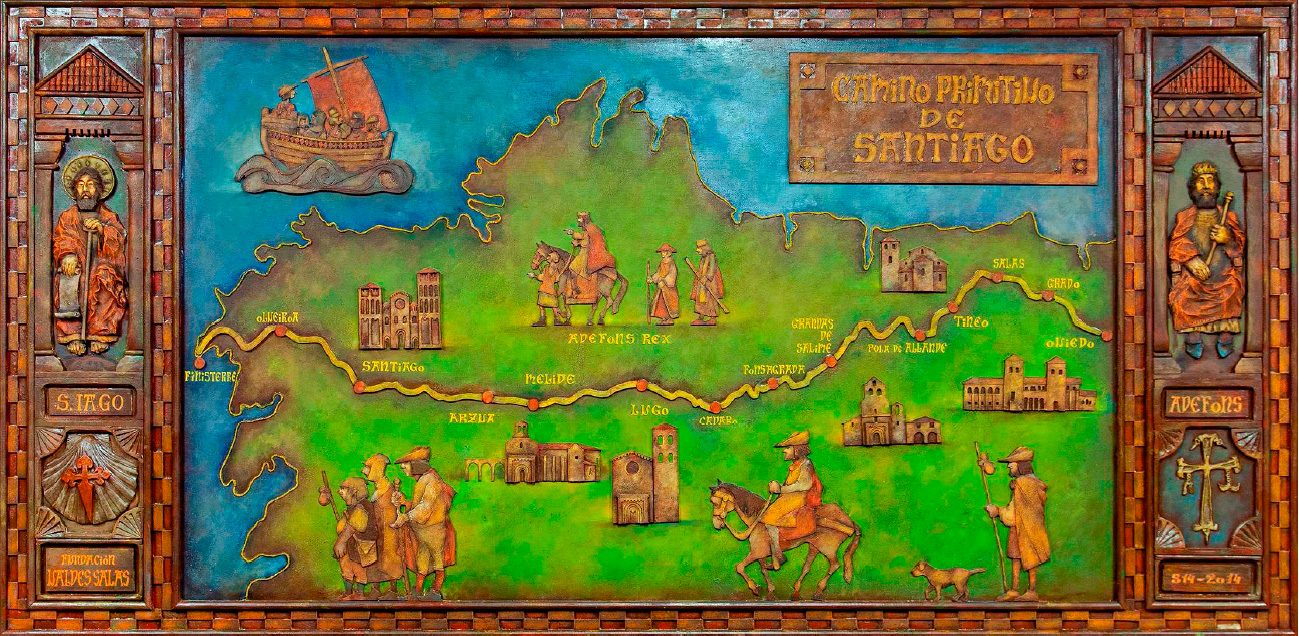
Credits: Elizabeth Sánchez Vegas. Plaques: Eladio de Mora (dEmo). Translation of the Jacobean Academy article: Devorah Sasha. Mural map courtesy of the Valdés-Salas Foundation.